
Putting Kids Through Their PaCEs: How Positive Childhood Experiences Can Support Resilience Practices in Overcoming Trauma by Janice Beller

When Jenny Easley, Program Manager for CASA of Southwest Idaho,[1] reflects on her six and a half years of work as a guardian ad litem in child welfare cases, she will tell you that she has seen some amazingly resilient children. Children who, despite extraordinary trauma and a high number of adverse childhood experiences (ACEs), manage to leave their time in foster care relatively unscathed.
It is, unfortunately, an exception and rarely starts out that way. “I can remember one child,” Jenny says, “whose behaviors really began to act up only after she was pulled from her physically and emotionally abusive home.” She added, “the girl was immediately labeled as a ‘bad kid’ even though her behaviors were clearly a result of the abuse she had silently endured – and had to lie about – at home. But once a positive community of supportive adults formed around her and she could see the successes she could achieve, there was no stopping her…”
One of the most challenging aspects of child welfare law is the elusive nature of positive outcomes for children. Why do some children “bounce back” from the trauma involved in a child protection case and others do not? The fact patterns for removal are often common and repetitive: dirty homes, parents with substance abuse or mental health issues, children subjected to the horrifying trauma of physical or sexual abuse at the hands of a trusted adult or sibling.
However, predictably replicating successful outcomes for children exiting foster care is anything but common. Two children can enter care for the exact same reason, but their condition and behaviors when exiting foster care can be dramatically different. Why?
Part of the answer appears to lie in a better understanding of the positive tools that children possess at the time a removal occurs. Just as child welfare experts now routinely assess children for their adverse childhood experiences (ACEs), a growing body of evidence now suggests that assessing children for their positive childhood experiences (PCEs) can give practitioners a reliable indicator of how that child may weather the storm of removal and a stay in foster care.
Understanding Adverse Childhood Experiences
The American Psychiatric Association defines ACEs as “disruptions to the promotion of safe, stable, and nurturing family relationships and are characterized by stressful or traumatic events that occur during an individual’s first 18 years of life.”[2] In layman’s terms, ACEs are a list of ten negative situations which can, when experienced in sufficient quantity, dramatically impact the physical and emotional wellbeing of a child. The research on ACEs is solid, validated multiple times over,[3] and such a common part of the lexicon in the social sciences that the tool for measuring ACEs has been adopted for international use by the World Health Organization.[4] While this article will not dive into the genesis of ACEs or their measure, relevant to this discussion is the concept that on a scale of one to ten, the higher a child’s “ACEs score” is, the less likely a child is to exhibit resilience when placed in foster care.[5] The research also strongly suggests a correlation between a child’s high ACEs and negative outcomes when exiting foster care, especially as a young adult who “ages out”.[6]
Balancing the Equation: Defining Positive Childhood Experiences
Once researchers gained a comprehensive understanding of ACEs and their often profoundly negative impact on children, it might not come as a surprise that the next line of inquiry focused on how to blunt the damage caused by a high ACEs score. In 2019, the first research team published its findings on a countermeasure for the trauma of ACEs, trying to understand the very question asked above: when children present with the same traumatic experiences (as expressed through their ACEs score), how did some children have better outcomes in adulthood than others?[7] The answer: a new expressive measure called the Positive Childhood Experience score (PCEs).
The American Psychiatric Association defines PCEs as “a set of interpersonal relationships between family, friends, in school, and in community that fosters a child’s capacity to thrive.”[8] While it might be easy to think of PCEs as a great vacation to Disneyland, or spelling the word “onomatopoeia” to win the fifth grade spelling bee, the PCEs that really matter are the sum total of small interpersonal moments where children learn to connect and trust the people around them. Identified in real world scenarios, a PCE is formed when a child, through repeated testing, feels safe in sharing his or her feelings with a family member, develops a sense of belonging within a school community, or derives enjoyment from participating in community traditions.[9]
Unlike ACEs, which are events that commonly occur within the home and not influenced by the community outside the home, PCEs can come from a variety of sources, both from immediate and extended family, as well as the greater community at large, including social groups like schools, churches, sporting teams, or service organizations.
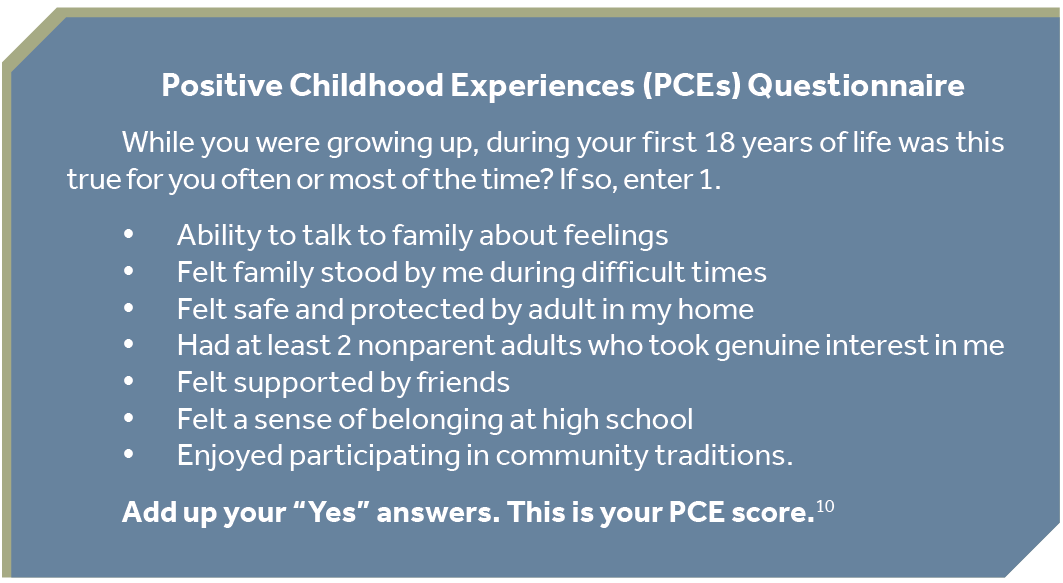
Positive Childhood Experiences (PCEs) Questionnaire[10]
For guardians ad litem (GALs) like Easley and the 76 GAL volunteers in Idaho’s Third Judicial District, each contributes to a child’s PCEs by being a non-parent adult who takes a genuine interest in the children they serve. “We engage with children, families, and foster parents in a way that invites us into a child’s community,” Easley notes. “Cheer events, baptisms, birthday parties, sporting events…we get to know the kids in an entirely different way that is profound and powerful.”
Most importantly, however, is the fundamental principle that a GAL sticks with their assigned cases from beginning to end. Easley shares, “When a case opens, the kids have talked to dozens of people, and we all blend together. But the GAL sticks. The GAL stays and the kids see them wherever they wind up. They realize that the GALs are there just for them.”
She continues, with great respect to the other members of the child welfare team, “We’re the only ones who have the whole history of the case of the children we serve. We stick like glue, and kids can count on their GAL being there.” It is this dedication to remain with a child throughout the entire case that makes GALs such a powerful PCE in a child’s life. It also makes a child’s GAL a conduit to facilitate other PCEs.
A GAL can communicate a child’s wants or needs from an old foster family to a new one, helping a foster parent build credibility faster with shy or timid children. They can facilitate continuity of social activities and help kids maintain critical social bonds at school and among peers. They also, as Easley notes, engage with school officials to ensure educators have accurate, up-to-date information regarding a child’s educational needs and necessary accommodations.
“GALs work with schools to build communities and promote success for the children, recommending and encouraging extracurricular activities, hobbies, and peer activities,” says Easley. “We even encourage the children to teach our volunteers new skills, so the children are empowered to be the experts and experience what it means to be accomplished in something.”
Totaling Up a Child’s PCEs
With PCEs conceptually identified, researchers began coming up with models and measurement tools, like the ACEs scale, to quantify and tally PCEs. In the 2019 Bethell research, her team designed and used a similar self-survey model with success.[11] Specifically, the team tested their tool to determine whether a correlation existed between the reported instances of depression and poor mental health days in young adults who spent time in foster care and the subjects’ positive and adverse childhood experiences.[12]
The PCE test instrument was a quick, seven statement questionnaire—included with this article—designed to assess the test-taker’s sense of emotional safety and trust while growing up. As with the standard ACEs test instrument, PCE scores were grouped in a similar fashion, with scores of 0–2, 3–5, and 6–7.[13]
But with just seven questions, how many PCEs did researchers discover were enough to make a significant difference in the mental and emotional health of adults who had spent time in foster care or experienced a significant amount of childhood trauma? Could enough little positive moments of trust and engagement really push back the onerous nature of ACEs like incarceration of a parent, divorce, physical or sexual abuse, or substance use in the home?
How Many Positive Experiences Are Enough?
While readers who are Star Wars fans may already intuitively know that the light side of the force is stronger than the dark, it turns out, PCEs work in much the same way to combat the effects of ACEs. First, Bethell’s study confirmed that with just three to five PCEs, young adults reported a 50 percent less chance of experiencing depression or poor mental health days.[14] With six or seven PCEs, study participants reported a whopping 72 percent less chance of experiencing the same kind of mental health issues.[15] Most importantly, these results held true even if the participant had a significant number of ACEs along with their PCEs.[16]
Additionally, researchers identified a “dosing” effect for PCEs, meaning that the more instances of a PCEs a child can rack up, the likelihood of suffering depression or a poor mental health day decreases even more significantly.[17] Perhaps the most powerful difference in the comparison between ACEs and PCEs is the amount of effort or action it takes to create one experience or the other.
While ACEs are defined informally as big, dark, powerful and traumatic moments in a child’s life—things that take inertia and momentum and can fundamentally shift a child’s perception of his or her place in the world (divorce, incarcerated parents, physical or sexual violence, etc.)—PCEs are quite the opposite. To think of PCEs another way: visualize each of the seven PCE statements as an empty bucket. Each time a child experiences a positive interaction that reflects one of those statements (e.g., “I got a bad grade on a test, but my mom didn’t get mad, she told me she’d help me do better.”), a metaphorical ping-pong ball goes in the bucket for the corresponding PCE statement. Every time a child experiences a negative interaction when testing one of the statements (e.g., “My friends thought it was funny when they let me get caught sleeping in class.”), a ping-pong ball comes out of the bucket. This process plays out many times a day and lots of different people contribute to the total number of ping pong balls in the buckets. A child’s PCE score is a snapshot, at any given moment, of how full his or her seven buckets are. Full buckets can indicate a child has resilience factors that can help combat ACEs trauma. Empty or almost empty buckets are an indication that a child may need strong support from a variety of different sources: parents, family members, friends, teachers, and mentors. In short, the pint-sized power of interpersonal moments to create PCEs make them an incredible force in building resilience in children who experience traumatic events.
“Of the 10 leading causes of death in the United
States, five are associated with ACEs and
two-thirds of all adults report at least
one adverse experience before turning 18.”
Why Should We Care About Developing Positive Childhood Experiences and Resilience in Children?
To understand clearly why communities should commit to developing resilience and PCEs within their children, one must look only as far as the damage ACEs do when left unchecked. The Centers for Disease Control has identified ACEs as an urgent public health issue, along with substance abuse/overdose, and suicide.[18] Of the ten leading causes of death in the United States, five are associated with ACEs and two-thirds of all adults report at least one adverse experience before turning 18.[19]
Adverse childhood experiences increase the risk of opioid use and with it, the risks of overdose and suicide.[20] Children or youth who have ACEs of four or more are three times more likely to misuse opioids, and 30 times more likely to attempt suicide.[21] A high ACEs score is associated with socio-economic struggles like unemployment, poverty, and undereducation.[22]
And these findings do not include the damage done by ACEs inside the body. Depending on when the traumatic event occurred, the impacts can range from poor brain development, a cascade of developmental delays and defects in babies,[23] to chronic diseases later in life like mental health conditions, heart disease, respiratory ailments, and even cancer secondary to long-term, toxic stress.[24]
Building off the original 2019 PCE study, additional studies continue to find more reasons why positive childhood experiences matter for children to whom traumatic events occur. Not only are high PCE scores attributed to lower instances of adult depression and poor mental health, but according to the American Psychiatric Association, PCEs are an accurate predictor of general adult functioning, even after accounting for the instances of substance abuse.[25] Developing family strengths through PCEs protect teens from substance abuse, suicide, emotional distress, and in fact, exposure to some specific PCEs decrease the risk of pregnancy by 30 to 40 percent.[26]
And, because PCEs support resiliency, these tiny moments of connection feed into the greater understanding of why resilience factors are so important as youth transition out of foster care. In a 2021 study for the Journal of Psychological Trauma, Miguel Nunez and his team looked specifically at how resilience factors influenced the outcomes of youth aging out of foster care.[27] Their study considered 38 resilience factors and found that of those 38 factors, 18 were statistically significant in predicting positive outcomes for youth exiting foster care. The list of 18 included resources like kinship care, school stability, receiving school encouragement, mentors (especially long-term ones), close relationships with caregivers, family members, or adults, and institutional agents available for tangible support or advice. [28]
Sound familiar? They should! Each resilience factor also has the potential to generate PCEs for the youth, in addition to strengthening resilience. It is, quite literally a “sunny side up” chicken-or-egg scenario where PCEs develop resilience factors, and resilience factors, in turn, generate more PCEs. And remember, PCEs have an ongoing beneficial effect, while ACEs are often a “one-and-done” traumatic event. So, regardless of which comes first—a focus on resilience building or making little moments matter to create PCEs—both resilience and PCEs continue to support a child or youth’s mental and emotional wellbeing well into adulthood.
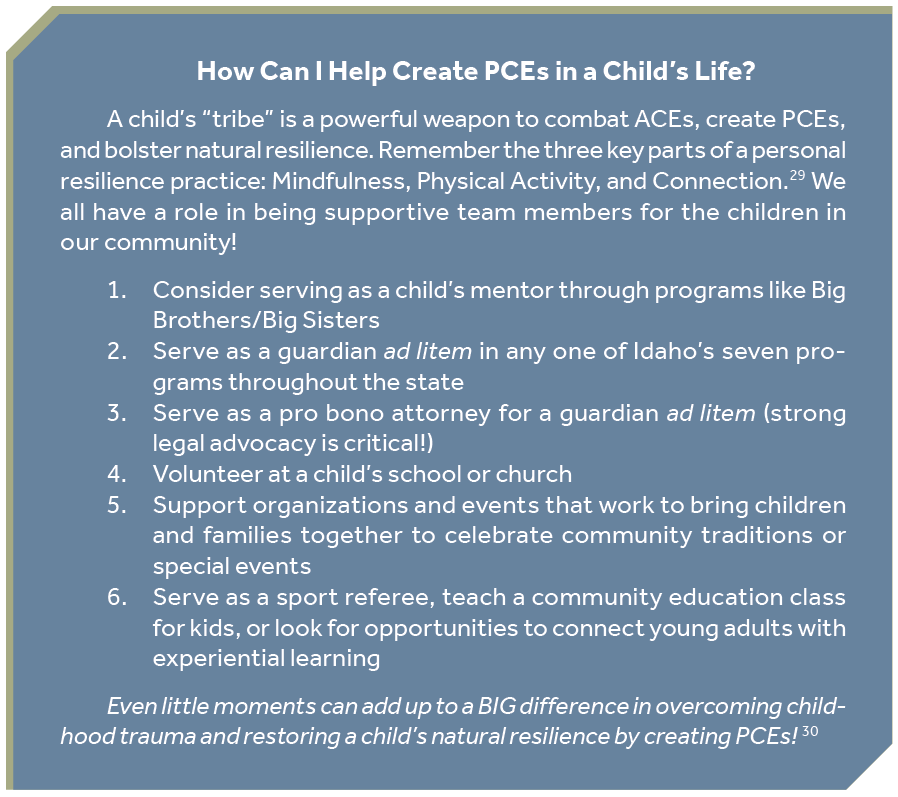
How Can I Help Create PCEs in a Child’s Life?[29]
A Winning Combination
While the body of research is still new and much is left to understand, the possibility for PCEs to make a meaningful difference with children and youth in foster care is exciting when such little steps can create such a fundamental change in youth transitioning to adulthood. Add the cumulative benefits that PCEs appear to contribute to the process of strengthening resiliency, and it should serve as a call to action for everyone concerned about the impact of trauma on our children.
Jenny Easley sees the power of PCEs so clearly when she thinks back on the young girl she started our interview with. She recalls how dire the situation was for the girl, and how after all the abuse she endured, the thing that cut most deeply was trying to understand why her father could not love—or even like—her. When the girl entered foster care, her behavior spiraled because she was angry, lost, and upset. School officials tagged her as a “bad kid” and her academic performance tanked.
Serving as her GAL, Jenny watched how the girl connected with her foster parent, now her adoptive mother. She watched the girl become involved with a church youth group, extracurricular activities, and Jenny was present the first time the girl was called out in school for her outstanding effort. Jenny notes, “once we got the school on board to see her through the right lens, the supports fell into place. I saw this young girl start building self-esteem, she started seeing for herself the things she could do, and she started climbing out and up.”
Jenny paused for a moment then added, “PCEs helped her feel competent in a lot of different ways, which started to undo the programming she had received from her parents starting at an early age. She stopped looking back at the trauma and started looking forward to her future. Once she achieved that first success and could see what she was capable of…she was off and running.”
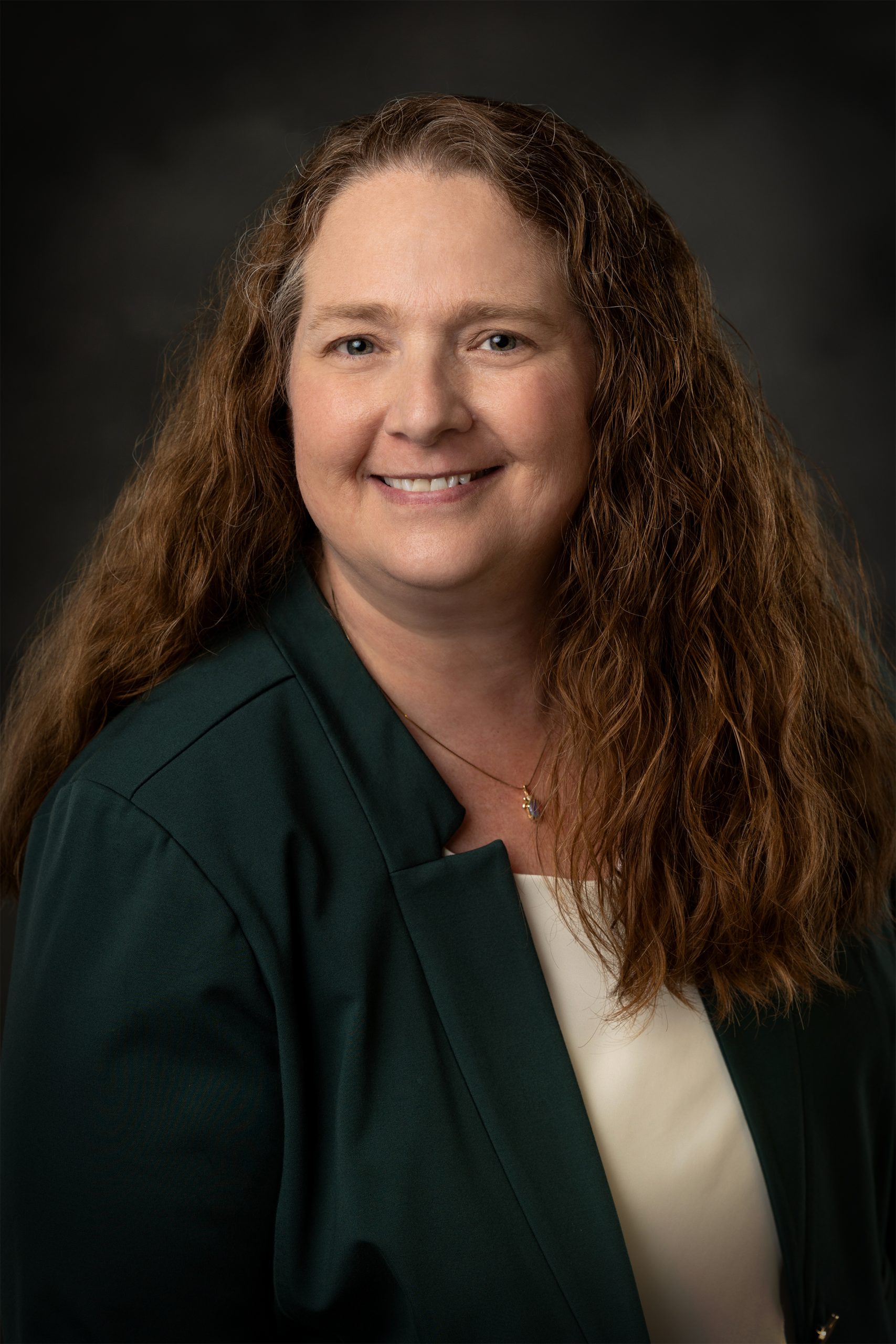
Over the last twenty years, Janice Beller has worked in a variety of facets of Idaho’s child welfare system. She served as a child protection GAL, worked for seven years on the Child Protection team at the Idaho Supreme Court, and just finished her fourth year exclusively handling a child protection calendar. She is a charter member of the Child Protection Section of the Idaho State Bar and has served as its Chair. Janice often reflects on the impact of purchasing her son’s first guitar in middle school and remains grateful every day that she gets to witness his evolution into a world-class musician and all-around extraordinary human being.
[1] Interested in learning more about volunteering as a guardian ad litem in one of Idaho’s seven CASA programs? You can learn more about Jenny’s program at: https://www.casaofswidaho.org.
[2] What are ACEs?, American Psychiatric Association Foundation, https://www.apaf.org/our-programs/justice/free-resources/what-are-aces/ (last visited November 25, 2025).
[3] Fahad M. Alhowaymel, The Relationship Between Adverse Childhood Experiences and Resilience Among College Students in Saudi Arabia: A Cross-Sectional Study, Nature, October 1, 2025, available at: https://www.nature.com/articles/s41598-025-16250-8 (last visited November 25, 2025).
[4] Adverse Childhood Experiences International Questionnaire (ACE-IQ), World Health Organization, January 28, 2020, available at: https://www.who.int/publications/m/item/adverse-childhood-experiences-international-questionnaire-(ace-iq) (last visited November 25, 2025).
[5] For an excellent introduction to the concept of adverse childhood experiences (ACEs), this author recommends Judge Bryan Murray’s outstanding article: The Pandemic of Adverse Childhood Experiences: Courts and the Health of Idaho Citizens. Advocate, June/July 2020 at 12.
[6] Rebecca Rebbe, Paula S. Nurius, Mark E. Courtney, Kym R. Ahrens, Adverse Childhood Experiences and Young Adult Health Outcomes Among Youth Aging Out of Foster Care, Academy of Pediatrics, April 27, 2018, available at: https://pmc.ncbi.nlm.nih.gov/articles/PMC6035089/ (last visited November 25, 2025).
[7] Christina Bethell, PhD, MBA, MPH; Jennifer Jones, MSW; Narangerel Gombojav, MD, PhD; et al, Positive Childhood Experiences and Adult Mental and Relational Health in a Statewide Sample, JAMA Pediatrics, September 2019, available at: https://jamanetwork.com/journals/jamapediatrics/fullarticle/2749336 (last visited November 4, 2025).
[8] What are PCEs?, American Psychiatric Association Foundation, https://www.apaf.org/our-programs/justice/free-resources/what-are-pce-s/ (last visited November 4, 2025).
[9] Understanding PCEs, Families Together, Inc., https://familiestogetherinc.org/forms/SMHI/Postive%20Childhood%2011-5-20203-21.pdf (last visited November 4, 2025).
[10] Positive Childhood Experiences Questionnaire: Positive Childhood Experiences and Adult Mental and Relational Health in a Statewide Sample, JAMA Pediatrics, https://chaplaincyinnovation.org/wp-content/uploads/2023/01/PCEs-ACEs-Questionnaire.pdf (last accessed November 4, 2025).
[11] Christina Bethell, PhD, MBA, MPH; Jennifer Jones, MSW; Narangerel Gombojav, MD, PhD; et al, Positive Childhood Experiences and Adult Mental and Relational Health in a Statewide Sample, JAMA Pediatrics, September 2019, available at: https://jamanetwork.com/journals/jamapediatrics/fullarticle/2749336 (last visited November 4, 2025).
[12] Id.
[13] Id.
[14] Id.
[15] Id.
[16] Id.
[17] Id.
[18] Injury Center Priorities, Centers for Disease Control, https://www.cdc.gov/injury/priorities/index.html#:~:text=ACEs%20prevention,ACEs%20prevention%20and%20mitigation%20efforts (last visited November 4, 2025).
[19] Id.
[20] Id.
[21] Id.
[22] Id.
[23] Erica M. Webster, The Impact of Adverse Childhood Experiences on Health and Development in Young Children, Global Pediatric Health, February 26, 2022, available at: https://pmc.ncbi.nlm.nih.gov/articles/PMC8882933/ (last visited November 4, 2025).
[24] Childhood Trauma & ACES, Cleveland Clinic, https://my.clevelandclinic.org/health/symptoms/24875-adverse-childhood-experiences-ace (last visited November 4, 2025).
[25] What are PCEs?, American Psychiatric Association Foundation, https://www.apaf.org/getmedia/9458d8f9-fcf9-4bb0-bcde-4d3f6472ad99/PCEs-Infographic.pdf (last visited November 4, 2025).
[26] Id.
[27] Miguel Nunez, Sarah J. Beal, Farrah Jacquez, Resilience Factors in Youth Transitioning Out of Foster Care: A Systematic Review, Journal of Psychological Trauma: Theory, Research, Practice, and Policy, September 2021, available at: https://pmc.ncbi.nlm.nih.gov/articles/PMC9070687/ (last visited November 4, 2025).
[28] Id.
[29] Id.