
AI in the Courts: Balancing Tradition and Innovation by Chief Justice G. Richard Bevan
Nearly a decade ago, as a district judge in Twin Falls, I was the first of our judges to start using electronic court records. At the time, I felt a little like a pioneer with a new map hand—excited about the possibilities, but also keenly aware that every step needed to be careful and deliberate.
Courts, by design, are careful institutions. The rules, the traditions, even the rituals of our work are meant to protect fairness and impartiality. Intentionality is at the heart of all we do.
At the same time, we are also a modern court system. We cannot ignore technology that may serve people better or help us work more efficiently.
Somewhere between tradition and innovation lies the balance we must strike—and at the center of that balance is the public’s confidence in our work.
In September, we launched a yearlong effort to produce a set of principles governing our use of AI as a court system. Artificial intelligence holds great promise. It could expand access to justice, offering tools to those who cannot afford a lawyer. It could free up our staff to focus on the complex and human sides of their work, while automation handles the routine.
But AI also comes with real risks. Used improperly, it could compromise confidential data. Worse, it could creep into decisions that must remain the responsibility of a human judge.
And so, we find ourselves charting new territory, much as I did ten years ago with electronic records.
This project is about helping us navigate wisely. Judges, attorneys, IT professionals, and court staff will develop recommendations for the Idaho Supreme Court to consider.
Together, we will examine both the risks and the benefits of AI, and we will shape principles to guide how it may be used responsibly in Idaho’s courts. Alongside that, we will look closely at the data that feeds these systems. The way we collect, store, and govern that data will profoundly affect how fair and unbiased these tools can be.
This effort will help us build a court system that keeps pace with change, encourages the public’s trust, and serves Idahoans even better in the years ahead.
John Adams once reminded us, “We are a government of laws, not of men.” In the same way, our courts must be courts of principles, not of algorithms. This work will help ensure that holds true in a new age.
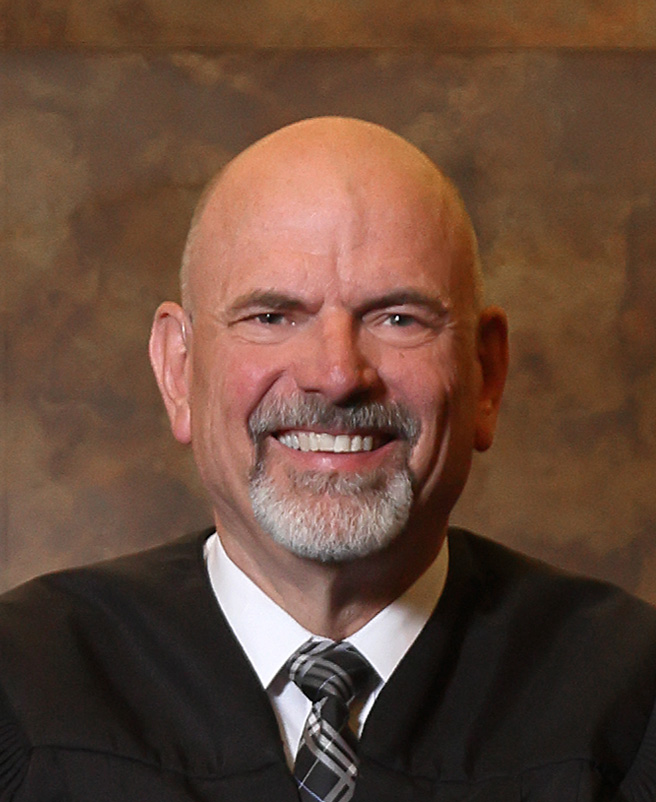
Idaho Supreme Court Chief Justice G. Richard Bevan was appointed to the Court in 2017 and is in his second term as chief justice. Previously, he served a long career as an attorney and later district judge, including four years as Twin Falls County prosecutor and eight years as administrative district judge for the Fifth Judicial District. He received his undergraduate and law degrees from Brigham Young University.