
Distinguished Lawyer Reed W. Larsen
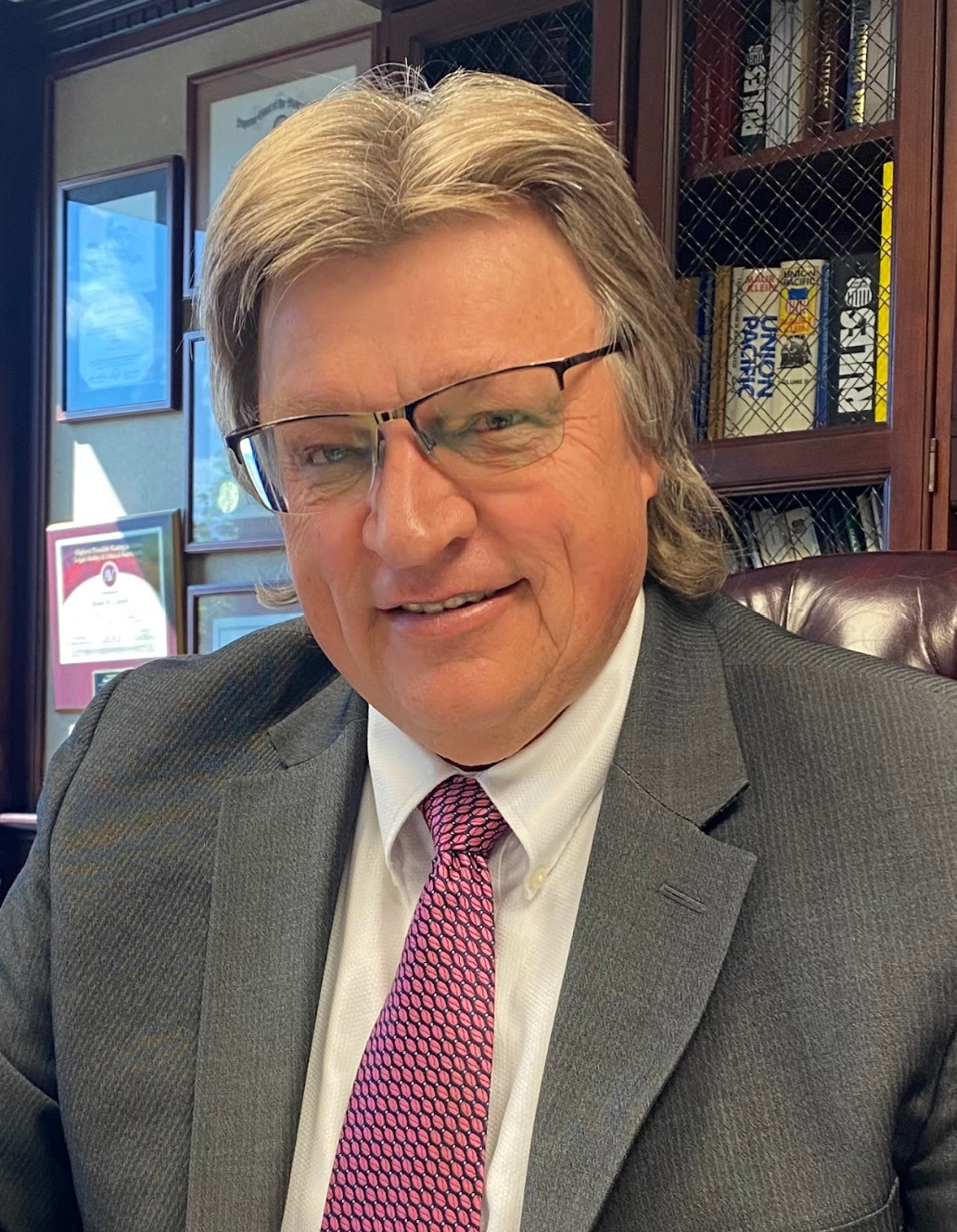
Background
Reed W. Larsen was born and raised on a farm in Burley, Idaho, and graduated from Burley High School in 1976. Growing up in a small town instilled in him a strong work ethic and a lifelong love of sports, including football, basketball, baseball, and track.
He attended Brigham Young University, graduating in 1982 with a degree in political science emphasizing middle eastern affairs and a minor in soil science. During college, he worked summers farming to pay for school and winters as a ski instructor at Sundance Ski Resort. He also became an avid supporter of BYU athletics, attending nearly every sporting event he could.
Reed earned his law degree from the University of Idaho College of Law in 1985; a graduating class he remains especially proud to be part of the class of ’85.
He began practicing law in Pocatello in 1985 with Racine, Olson, Nye, Cooper & Budge. After becoming a partner, he practiced there for 13 years alongside mentors and colleagues Lou Racine, Bill Olson, Mark Nye, and Gary Cooper. In 1998, Reed and Gary Cooper formed Cooper & Larsen, a partnership Reed describes as one of the great blessings of his professional life.
Throughout his career, Reed has served as Sixth District Bar President, Idaho State Bar Commissioner, and Idaho State Bar President. He also served six years on the Idaho Judicial Council, participated on the Legislative Compensation Committee, and served on the University of Idaho College of Law Advisory Board. In 2016, he was inducted into the American College of Trial Lawyers, which he thought was the most surprising award until this Distinguished Lawyer award.
Beyond the law, Reed has been deeply involved in rodeo throughout the Intermountain West for more than 30 years. He served as Chairman of the Intermountain Professional Rodeo Association for 13 years and was inducted into the Eastern Idaho Horseman Hall of Fame.
Reed and his wife, Carleen, have been married for 10 years and together share a large blended-family of eight children, 18 grandchildren, and four great-grandchildren. They enjoy traveling, spending winters in Wickenburg, Arizona, and making the most of time with family and friends.
Career Accomplishments
From the beginning of his legal career, Reed aspired to become a trial lawyer. Practicing in Pocatello, a railroad town, he recognized the need for representation in railroad injury cases under the Federal Employers Liability Act (FELA). In 1986, he handled his first FELA case representing Mike Hanners, securing a successful outcome that helped his client transition into a new career in education. That case launched a railroad practice spanning Idaho, Utah, Wyoming, Washington, Oregon, Nebraska, and Missouri, while also creating lifelong relationships with the families he represented.
His railroad litigation work also contributed to important public safety improvements, including litigation that helped lead to the Cheyenne Street overpass project in Pocatello and the closure of a dangerous railroad crossing in Power County.
Reed also handled significant public safety litigation involving cyanide predator-control devices used by the Bureau of Land Management. The case drew national attention and contributed to the eventual ban of the devices in 2019.
Over the course of his career, Reed has tried cases in state, federal, and tribal courts throughout the western United States. He handled both tribal disenrollment cases in the history of the Shoshone-Bannock Tribal Court, experiences he describes as especially memorable.
Another professional milestone was trying the first Americans with Disabilities Act jury case in Idaho. Reed represented a railroad employee who injured his knee at work, recovered, and simply wanted to return to his job. Although the underlying FELA claim had been resolved, the railroad refused to allow the employee back to work, forcing him into an 18-month battle to regain his position.
During the litigation, the railroad ultimately agreed to reinstate the employee, which Reed considered an important victory. However, the company still refused to compensate him for the emotional and financial hardship caused by being kept from work. The case proceeded to trial before the Honorable Judge Randy Smith.
In a moment Reed has never forgotten, Judge Smith remarked during trial that he wouldn’t “give a nickel” for Reed’s case. Reed quickly responded, “I’m glad it’s going to a jury then.” The jury ultimately returned a verdict of $150,000 in favor of Reed’s client, along with attorney fees and costs—a result Reed remembers not only as a legal victory, but as a meaningful win for fairness and dignity in the workplace.
For Reed, the most meaningful aspect of practicing law has always been helping people and building lasting friendships along the way.
Role Models and Mentors
Reed credits much of his success to the example and guidance of others. His mother taught him the value of determination and follow-through, while his father and years of farm work taught him discipline and perseverance. He also credits Glen Larson and his wife with teaching him important lessons about business, work, and education.
Professionally, Reed was shaped by mentors Lou Racine, Bill Olson, Mark Nye, and especially Gary Cooper, whom he describes as a mentor, partner, and brother. He learned not only how to practice law, but also the importance of maintaining balance, humor, and perspective in a demanding profession. Reed often jokes that Lou and Bill taught him if legal work happened to be near a good fishing stream, it was part of the job description to do both. Over the years, he perfected that philosophy, settling cases while skiing or even on horseback at team roping events.
He also expresses gratitude for the many judges and attorneys who supported and encouraged him throughout his career, including Judge Woodland, Judge McDermott, Judge Randy Smith, and Judge Monte Carlson.
Outside Interests
Although Reed has loved practicing law, he has never allowed the profession to fully define him. He has always valued his roles as a husband, father, grandfather, rancher, and horseman just as highly.
An avid team roper and horse enthusiast, Reed has competed throughout the western United States, earning numerous saddles, buckles, and other awards along the way. Winters in Wickenburg, Arizona allow him to continue working remotely while enjoying rodeo, golf, and the western lifestyle he loves.
Reed and Carleen also enjoy traveling and exploring new places together. They recently returned from a Mediterranean cruise and look forward to seeing more of the world in the years ahead.
Closing Reflections
Reflecting on his career and life, Reed considers himself extraordinarily fortunate. He is deeply grateful for the mentors, partners, colleagues, staff, friends, and family members who supported him throughout his journey.
He especially thanks Gary Cooper for decades of friendship and partnership; his wife, Carleen, for her love and encouragement; and his longtime staff members Jamie Anderson, Connie Wynn, Liz VanOrden, and Karla Holm for their loyalty and professionalism. He also expresses pride in the next generation of attorneys at Cooper & Larsen, including Tony Budge and JD Oborn.
Reed describes receiving the Distinguished Lawyer Award as both humbling and deeply meaningful. To be mentioned alongside attorneys he has admired throughout his career is, in his words, one of the greatest honors of his life