
Book Review: Idaho Legal Research, Fourth Edition
Review by: Hon. Jessica Lorello
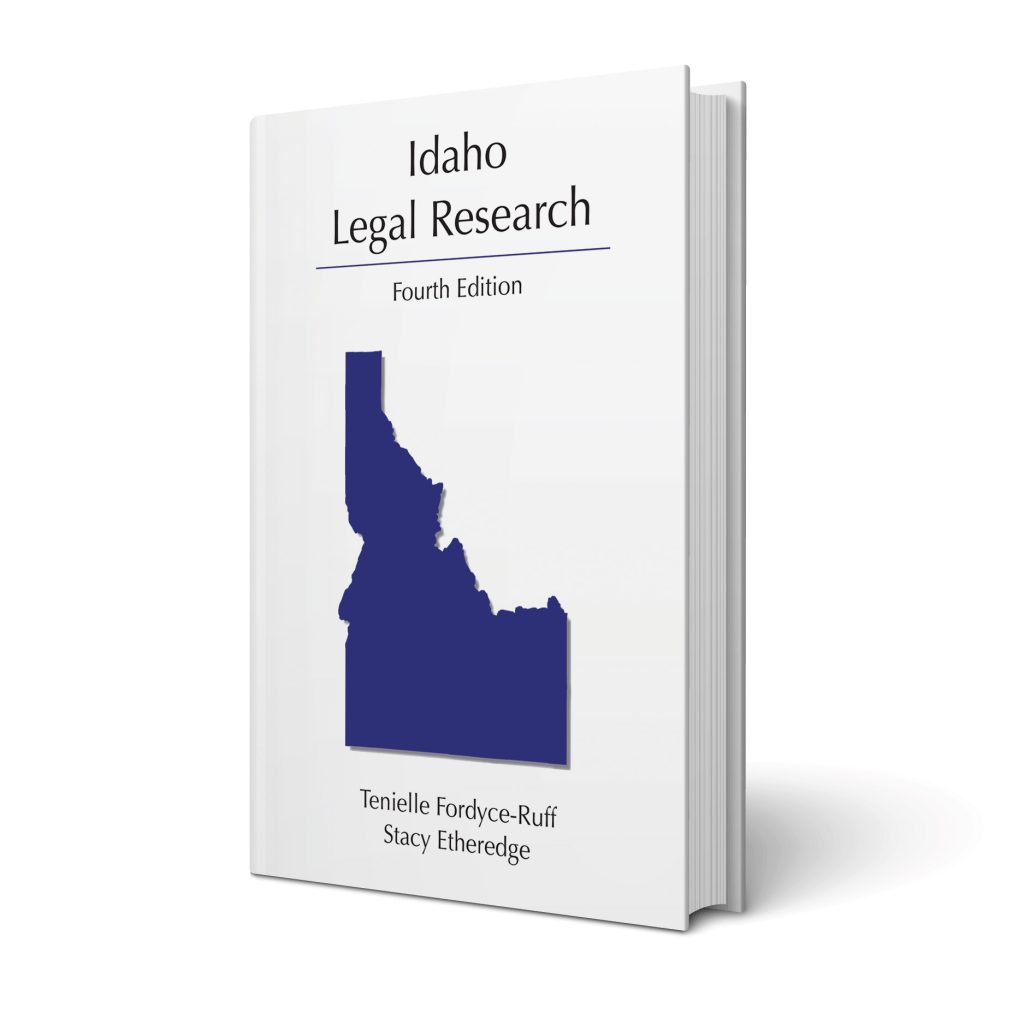
As an adjunct professor, including for introduction to legal research for first year law students, I am always on the lookout for good resources to use in class and to recommend to practitioners. Idaho Legal Research checks all the boxes! Idaho Legal Research, Fourth Edition, is a terrific tool for legal research generally and is the guide for conducting Idaho-specific legal research.
The preface to the prior (third) edition of Idaho Legal Research, authored by Professor Tenielle Fordyce-Ruff, noted the updated book’s increased emphasis on online research with guidance on how to use online resources effectively. The fourth edition, revised and updated by Professor Stacy Etheredge, builds on the foundation from prior editions, with a focus on restructuring the book into three distinct parts: (1) the groundwork for legal research and basic research methods; (2) an in-depth discussion of the top five sources used by practitioners (and professors); and (3) examination of advanced legal research topics, including citators, legislative history, and advanced online research tools. The separation between basic and advanced tools and techniques presents a user-focused approach that can meet the reader where they are.
The newly published fourth edition of Idaho Legal Research begins with a chapter on the structure of law and legal information, identifying the difference and importance of primary and secondary sources. The first chapter also explains the hierarchy of legal authority, a key concept to understand when advancing legal arguments. The second chapter explains the sources, methods, and tools available for conducting legal research, including identification of no cost providers, and tips for conducting searches. The process of legal research is the focus of the third chapter. The research process is a central focus in teaching legal research to new law students, but the importance of an effective and efficient research process is a skill that endures throughout the practice of law. This chapter is not only a good starting point for teaching, it provides a framework that can be consulted at any point in one’s legal career when taking on the task of finding the answer to a legal problem. As the concluding pages of this chapter note, legal analysis and legal research go hand-in-hand.
Part Two of the fourth edition of Idaho Legal Research, takes a deep dive into Idaho-specific sources (Chapters 4 through 6), the Idaho court system and case law (Chapter 7), and secondary sources (Chapter 8). While practitioners often spend a great deal of time reading and researching case law, the review of the value of secondary sources is a great reminder of tools that provide a greater understanding and explanation of legal principles that can enhance the depth of your legal analysis. Part Three of the text includes discussion of citators, a critical step in making sure your research is current. This section of Idaho Legal Research also explores legislative research and outlines advanced research processes and analyses and advanced online research.
The cherry on top for legal research professors is the addition of Chapter 14, which includes a legal research task (with answers!) that illustrates ways one could approach a research task. In short, I give two thumbs up to the fourth edition of Idaho Legal Research.