

State of the Judiciary Address by Chief Justice G. Richard Bevan
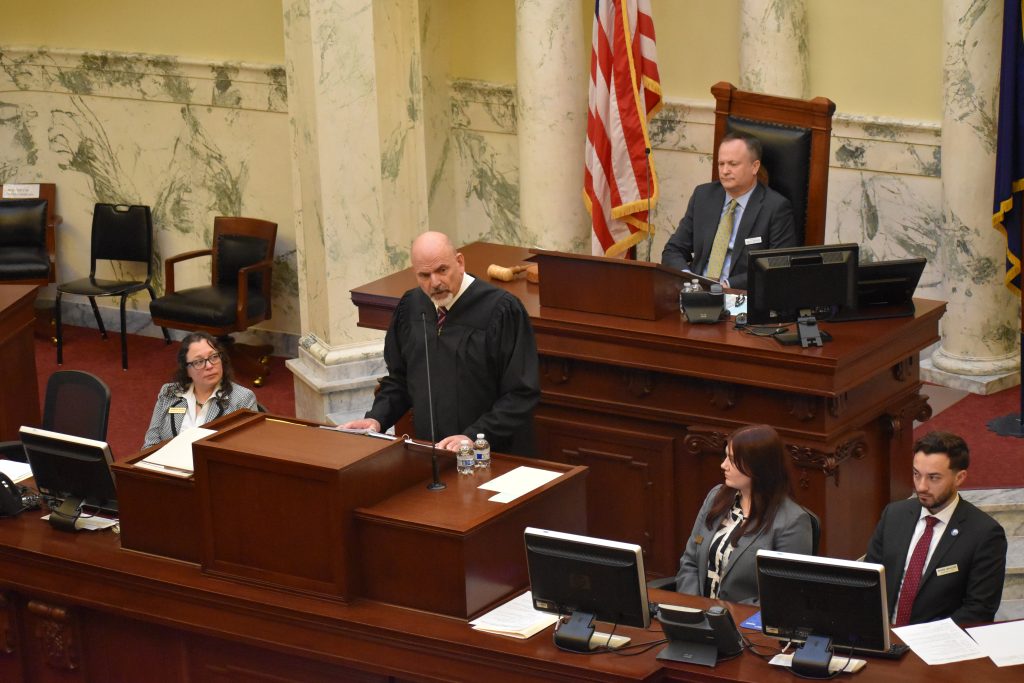
Delivered to the Idaho Senate and Idaho House of Representatives on January 21, 2026.
Introductory Remarks
Thank you for inviting me to join you today to discuss the work of our third branch of government. I value this annual opportunity to meet with you here, in the chambers where you enact the laws we are charged to apply.
We meet this year at a time of fiscal restraint. Idaho, like many states, is navigating tighter budget conditions, and the Judicial Branch has acted accordingly. I am not here today to ask for more from the general fund or for structural expansion. My purpose instead is to describe the work being done in Idaho’s courts and the leadership required to sustain a strong and independent judiciary through both prosperous and lean times.
Joining me today are my fellow justices of the Supreme Court and the judges of the Idaho Court of Appeals. Before I begin, I would like to recognize Court of Appeals Judge Michael Tribe, who has recently assumed the role of chief judge of that court. I would also like to acknowledge Judges Dave Gratton and Molly Huskey, who will retire later this year after a combined 32 years of service advancing the rule of law in Idaho. I am honored to serve alongside them.
On our country’s 250th anniversary, it is worth recalling why the judiciary was designed as a separate and co-equal branch of government. As Alexander Hamilton explained in Federalist No. 78, the judiciary “may truly be said to have neither force nor will, but merely judgment.” Courts were meant to function steadily and independently — guided by law and faithful to their constitutional role, regardless of circumstance.
With that understanding, I would like to spend our time today describing how Idaho’s judiciary is meeting its obligations, exercising careful stewardship, and continuing to serve the people of this state with integrity and resolve—anchored in our constitutional role and mindful of the responsibilities we carry into the years ahead.
Filings & Trends
Idaho’s Constitution charges the Judicial Branch with providing the fair, timely, and impartial resolution of cases. We are the people’s resource for resolving disputes under the rule of law. In practice, that means our courts must be conversant in matters ranging from criminal procedure and land use to juvenile corrections and complex civil litigation. We see people at some of the most difficult moments of their lives, where personal, legal, and societal pressures intersect.
Our trial courts consist of 154 judges spread across the 44 counties. In just one year — fiscal year 2025—prosecutors presented those judges with nearly 58,500 criminal cases alleging everything from disturbing the peace to murder. In another 3,900 cases, they asked our judges to intervene with children 18 and younger under the Juvenile Corrections Act.
Our civil caseload has unexpectedly jumped the past two fiscal years. Our judges received nearly 93,000 new civil cases in FY25. That is a 17% increase from just two years before. We’re seeing more complex civil matters that require skilled attorneys and greater involvement by the courts. High-value cases before the district courts involving topics such as business disputes, debt collection, medical malpractice and personal injury were up 60% from two years before. We see consistent numbers of divorce or custody cases involving minor children; many resolve peacefully but some involve deeply emotional situations.
When people think of courts, the first image that often comes to mind is a trial. But often, justice is achieved through negotiation and resolution by the parties themselves, within a legal framework designed to ensure fairness and predictability. When that framework is clear, many disputes are resolved without requiring a judge or jury to decide them. “Resolving disputes” may sound abstract. I share these numbers to give you a sense of the scale at which the public seeks our services. Each one of those cases is a person filing a complaint, a charging document, some sort of paperwork seeking a just resolution to the problem before them. Depending on the path to an outcome — and if that path involves a jury — hundreds more Idahoans may become involved before the case ends.
Trials, however, remain a significant and demanding part of judicial work. Many district judges are in jury trials two to three weeks each month in addition to their in-chambers responsibilities of research, writing, and decision-making. Magistrate judges are likewise deeply engaged in courtroom work — trying divorce and custody cases, presiding over child protection matters that may result in the termination of parental rights, and handling complex probate litigation.
Changing Lives — Our Treatment Courts
With your support over many years, Idaho’s courts have developed treatment court programs that both relieve pressure on crowded prisons and help families address destructive cycles of addiction and mental illness. These efforts are not abstract policy choices. They change lives.
Consider a recent graduate of one of our treatment courts. This young man faced a challenge our judges see far too often: a serious mental health disorder compounded by substance abuse. This combination ultimately led to him landing in felony court. Prior hospitalizations and outpatient treatment had failed to produce lasting change.
Through structured participation in a mental health court in Ada County, that trajectory shifted. He achieved sobriety, began consistently treating his mental illness, learned to live independently, and returned to school. Just before his graduation, he wrote: “My life has changed in many ways … and the ways I have changed have all been for the better. I am grateful for this program, and I am finally back on track to living a meaningful life.”
We could not sustain this work without strong partnerships. For nearly 30 years, this legislature, the counties, and local communities have shared a vision for the promise of treatment courts. One critical component of that work now deserves mention. Peer support services — provided by individuals with lived experience — play an important role in mental health courts by helping participants stay engaged, navigate setbacks, and build trust in the process.
Recently, the Idaho Department of Health and Welfare ended funding for these services. To maintain these vital services for participants currently in the system, the Judicial Branch has identified resources within our existing budget to sustain peer support through the current fiscal year, ending June 30, 2026. What happens beyond that point remains uncertain, and we are approaching that question deliberately.
In the coming months, we will meet with mental health court judges and professionals to better understand the impact of losing peer support services and whether these courts can continue to operate as intended without them. Treatment courts play a proven role in helping individuals become productive members of their communities, and preserving that work matters.
Mediating Families
Divorce and child custody cases are among the most complex matters our courts are asked to resolve. The legal questions may be straightforward; the human relationships are not. Emotions run high, and the consequences of these decisions can shape families for years.
Even so, only a small percentage of family law cases ultimately go to trial. That reflects the availability and effectiveness of services our courts provide to help families resolve disputes without prolonged litigation.
Mediation is one of the most important of those tools. Last year, a case before our courts involved a parent’s request to modify a custody order that had been in place for more than ten years. The parties had already attempted mediation, but the court ordered them to try again before moving toward trial. This time, with the right mediator, the parents reached agreement in less than two weeks.
In the midst of a custody dispute, parents may not fully understand their options or may feel locked into conflict. A skilled, neutral mediator can help them step back, reframe the issues, and focus on what matters most — the best interests of their children — allowing families to move forward with greater stability and far less harm.
Accessing Cases
The examples I have just shared focus on services available once a case is underway. An equally important part of our work involves making it easier for people to access the court system in the first place, and for them to navigate it with confidence and dignity.
One such service is our Guide & File program, which helps individuals who are representing themselves create and file certain types of court documents. For many people, it provides a clear starting point in a process that might otherwise feel overwhelming. Remote hearings offer another important access point, particularly for litigants who work full time, live far from a courthouse, or have caregiving responsibilities that make travel difficult.
Another key resource is our Court Assistance Officers. Located throughout our state, they provide practical guidance that helps self-represented litigants file and move their cases forward efficiently. For many Idahoans, these trained professionals serve as a vital point of contact between the public and the courts. In doing so, they help ensure justice is accessible to those without an attorney.
For years, we have provided an online case search portal for public access to basic case information. When the vendor supporting that system announced it would discontinue the software, we used the opportunity to reassess and modernize our online services.
Early last year, we launched an Attorney of Record Portal, fulfilling a longstanding request from Idaho attorneys for secure online access to documents in their own cases. Later this year, we expect to release a new portal for law enforcement and certain other government users, along with an updated public case information portal that will offer improved functionality and usability.
Together, these efforts are part of a multi-year initiative to modernize access to Idaho’s courts. As we mark ten years since beginning our transition to electronic case management, I am encouraged by the continued benefits these tools provide for the people we serve.
Modernizing Facilities
Courts in Idaho operate through a longstanding partnership between the Judicial Branch and our counties. The state provides judges and centralized administrative support; counties provide court staff and the facilities in which justice is delivered. That arrangement reflects Idaho’s commitment to local access to justice.
Over the past year, several counties made significant investments in that partnership by building or upgrading court facilities. These projects are neither simple nor inexpensive, but when done thoughtfully, the results are meaningful. We are grateful to the county clerks, commissioners, and local leaders involved in this work.
In June, Nez Perce County replaced its deteriorating original courthouse with a new facility that blends contemporary design with respect for history, incorporating courtroom features with ties to the Idaho Supreme Court dating back more than a century.
Other counties have taken similar steps. Bonneville County repurposed vacant space to create a courtroom designed for large, multi-party trials with technology that improves the experience for jurors and court participants. In July, Kootenai County completed an expansion of its Justice Building, adding three courtrooms and additional space to meet growing judicial needs.
Custer County is nearing completion of a new courthouse that addresses longstanding challenges, including compliance with the Americans with Disabilities Act, while improving juror access to digital evidence and accommodations for traveling district judges. In Twin Falls County, courts have begun operating in an expanded justice building near the historic courthouse downtown—bringing facilities into the modern era in one of Idaho’s busiest judicial districts.
Notably, three of these counties are among those for which this legislature approved new judges last year. These facility investments underscore the growing demand for court services and demonstrate how thoughtful planning and collaboration can meet that need.
Ensuring Security
It has been only a month since a man approached the Shoshone County Sheriff’s Office and began firing his weapon. The nearby courthouse was closed for a state holiday. But had it been open, it is unsettlingly easy to imagine county clerks, court staff, or judges finding themselves in harm’s way.
All of us who serve in public office understand that risk is not theoretical. Legislators, judges, and executive officials alike have been reminded — tragically — that public service can make one a target, especially given the importance of conducting public business in a space open to the public. That reality places sustained pressure on courthouse security.
Under Idaho’s longstanding state–county partnership, responsibility for courthouse security rests with the counties. For many — particularly those with limited resources — meeting modern security needs presents real challenges.
At the same time, the Judicial Branch remains focused on the safety of both our people and our systems. Threats directed at Idaho’s judges and courts have increased significantly in recent years. While most never materialize, those that do require precautions that can disrupt court operations and delay the delivery of justice.
The State of Idaho has a legitimate interest in the security of courthouses where state-employed judges conduct the public’s business. While I do not raise that issue today for resolution, it is one that warrants thoughtful discussion in the future as we consider how best to protect those who serve and those who come to court seeking justice.
As counties address physical security needs, the Judicial Branch has continued parallel efforts on the technology side. Judges, clerks, and court personnel are transitioning to a unified software platform and court network, allowing cybersecurity protections to be applied more consistently statewide.
In just the first nine months of 2025, those systems blocked more than 1.79 million phishing attempts targeting court employees and over 7.3 million malicious attempts to access court-managed websites. These are not abstract threats — they are daily reminders that safeguarding the justice system requires constant vigilance.
Helping people resolve disputes, ensuring access to court, and maintaining safe and secure courthouses all matter more when the public understands why these services exist. For that reason, education remains an important part of the Judicial Branch’s work.
As John Adams observed, “Liberty cannot be preserved without a general knowledge among the people.” That principle continues to guide our efforts to help Idahoans — young and old — understand the rule of law and the role courts play in our system of government, particularly at a time when civic knowledge cannot be assumed, and public confidence depends as much on understanding as on outcomes.
For several years, the judiciary has supported initiatives such as an annual institute for K–12 teachers who want to strengthen how they teach students about the courts. More recently, the Supreme Court has made direct student engagement a priority during our travels. When we hold court in communities outside Boise — as required by statute — those visits increasingly include time with local schools and homeschool groups to explain to our future leaders how courts function and why the rule of law matters.
Our local courts are equally engaged. Courts across the state hosted middle- and high-school mock trial competitions this past year, while other students attended real or simulated court proceedings during Law Day events in May.
These efforts have been consistently well received and reflect a genuine appetite for greater understanding of our constitutional system — an understanding essential to the health and durability of our democratic republic.
Looking to the Future
Looking ahead, the work of Idaho’s Judicial Branch remains grounded in the rule of law — the principle that no matter who we are, the law applies equally to all. Our guideposts are clear: the Idaho and United States Constitutions and the statutes you enact. Within that framework, there are many needs and competing priorities, and many ideas about how to strengthen the court system Idahoans rely on every day.
Last year, we took a broad look inward. We surveyed court users, judges, clerks, and justice-system partners about their experiences with our courts. Court leadership across the state examined those responses and distilled them into five governing principles to guide our work over the next three years.
Those principles focus on improving court operations, strengthening public trust, ensuring a safe and secure work environment, fostering a strong workforce, and using technology and data thoughtfully to improve how justice is delivered. The task before us now is to carry them forward — deliberately, responsibly, and in partnership with others.
These principles are now available on our website for the public to read. They reflect our approach to advancing justice in Idaho: collaborative, efficient, and mindful of the long-term trust placed in our courts.
You and I serve on common ground. Each of us is entrusted with advancing the rule of law through public service. That shared responsibility remains at the heart of our constitutional system.
The rule of law is the guiding star of our civil society. We are its servants. I am grateful to serve alongside you in that enduring work.
Thank you.
BIO: Idaho Supreme Court Chief Justice G. Richard Bevan was appointed to the Court in 2017 and is in his second term as chief justice. Previously, he served a long career as an attorney and later district judge, including four years as Twin Falls County prosecutor and eight years as administrative district judge for the Fifth Judicial District. He received his undergraduate and law degrees from Brigham Young University.