
Remembering the Bar: Reviving the Tradition of Local Memorial Tributes by Patricia E.O. Weeks

On March 6, 2026, the Idaho Supreme Court held a dignified and moving Memorial Service honoring judges and attorneys who passed away in 2025. The ceremony, streamed by Idaho Public Television, offered a statewide moment of reflection, an opportunity for the legal community and the public alike to recognize the lives, service, and contributions of those who shaped the law in Idaho.
While this statewide observance continues an important tradition, it also invites reflection on a once-vibrant local practice that has largely faded from view. Closer to home, the Second District Bar, historically known as the Clearwater Bar Association, once maintained a deeply personal and meaningful custom of holding formal “In Memoriam” proceedings for deceased members of the bench and bar.
These tributes were not informal remembrances. Rather, they were structured court proceedings. A committee would be appointed, a formal resolution drafted, and colleagues would gather in a courtroom to present testimony honoring the life and career of the departed. The proceedings were recorded and transcribed, preserving not only individual legacies but also a rich slice of local legal history.
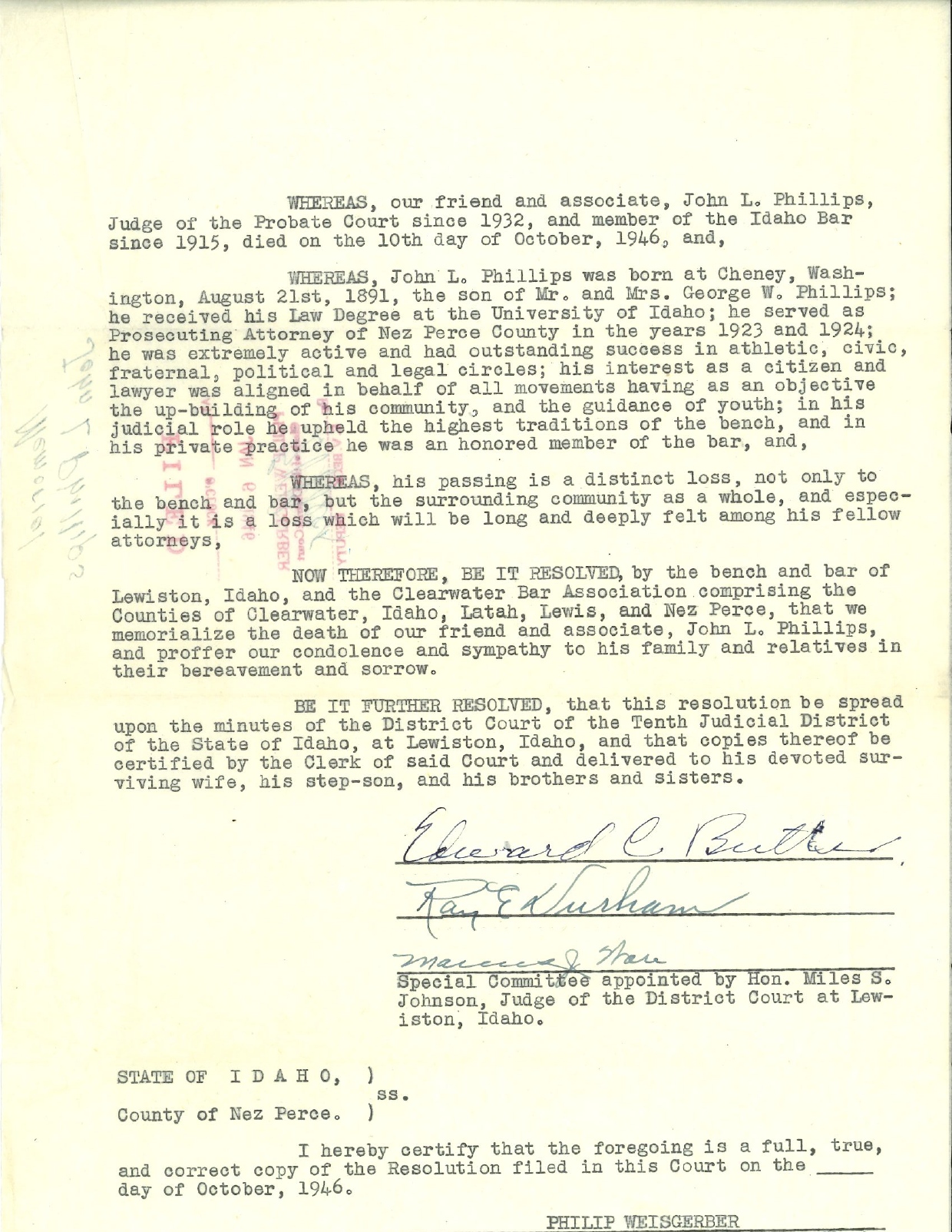
In Nez Perce County, records of these memorials date back to 1946, with the most recent found in 1982. Though the practice has since fallen into disuse, the surviving transcripts offer a vivid and often eloquent window into the professional and personal lives of those who came before us.
One of the earliest recorded tributes honored John L. Phillips (1891–1946), a graduate of the University of Idaho College of Law. Phillips served as Nez Perce County Prosecutor from 1923 to 1924, later becoming a judge before returning to private practice. He was remembered as an “honored member of the bar,” and the Clearwater Bar formally extended “condolence and sympathy to his family and relatives in their bereavement and sorrow.” Though brief, the resolution reflects the enduring respect accorded to those who dedicated their careers to public service and the law.
Other memorials reveal a more personal and even colorful view of advocacy and courtroom life. At the 1982 tribute for Verner R. Clements (1896–1982), attorney Jim Givens rose with the traditional opening, “May it please the court,” and proceeded to recount a memorable murder trial in Latah County. The case involved a farmer accused of killing his hired hand.
According to Givens, Clements approached the case “with words as his palette and brush painted a picture almost unrecognizable to the jurors”. He depicted his client not merely as a defendant, but as a hardworking “tiller of the soil” and “the backbone of the nation.” Clements then unfolded the emotional core of the defense: the farmer’s unexpected return from the fields after a horse lost a shoe, “to his horror” discovered there had been more going on in the “chicken house” than picking chickens”. The tiller of the soil “administered a dose of lead poisoning from which the deceased never recovered.”
Clements worked to rehabilitate the vision of the deflowered American motherhood back to her vision of American virginity despite the fact she’d given birth to four children. Clements’ twelve friends quickly returned from the jury box and “assisted their friend” “in finding the defendant not guilty.” The story, while colorful and creative, left a lasting impression on both his contemporaries and the historical record.
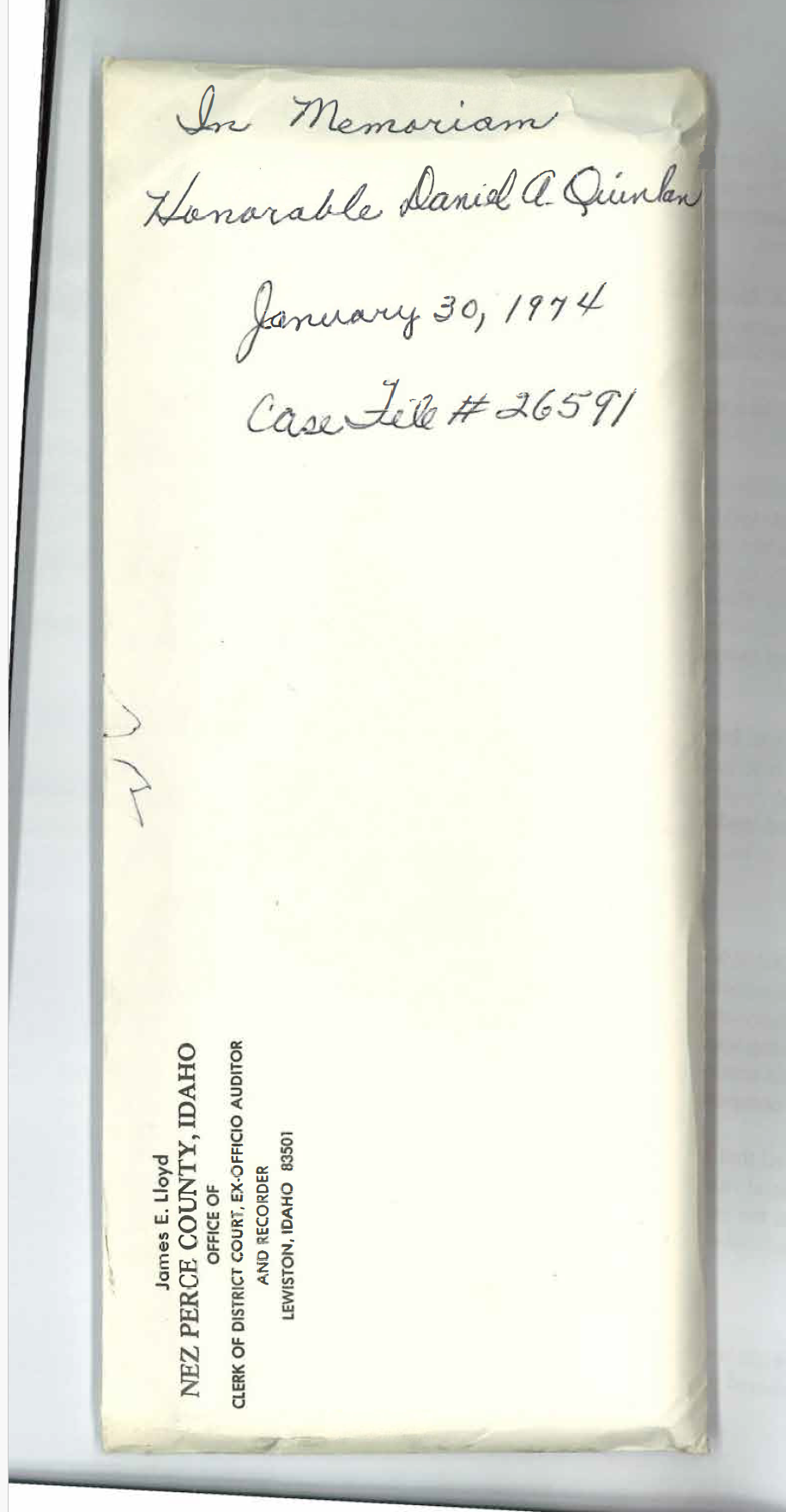
Similarly, the 1973 tribute to Daniel A. Quinlan (1918–1973) highlighted not only professional excellence but also personality and humanity. Attorney Owen Knowlton remembered Quinlan as “a man of many talents,” who brought to the practice of law “an Irish wit, gift of storytelling and mimicry,” along with “integrity and compassion and understanding.” Yet Knowlton added a telling note familiar to any litigator: “In a trial or lawsuit Dan was a dangerous adversary.” The balance between collegial respect and adversarial rigor is a hallmark of the profession, one clearly embodied by Quinlan.
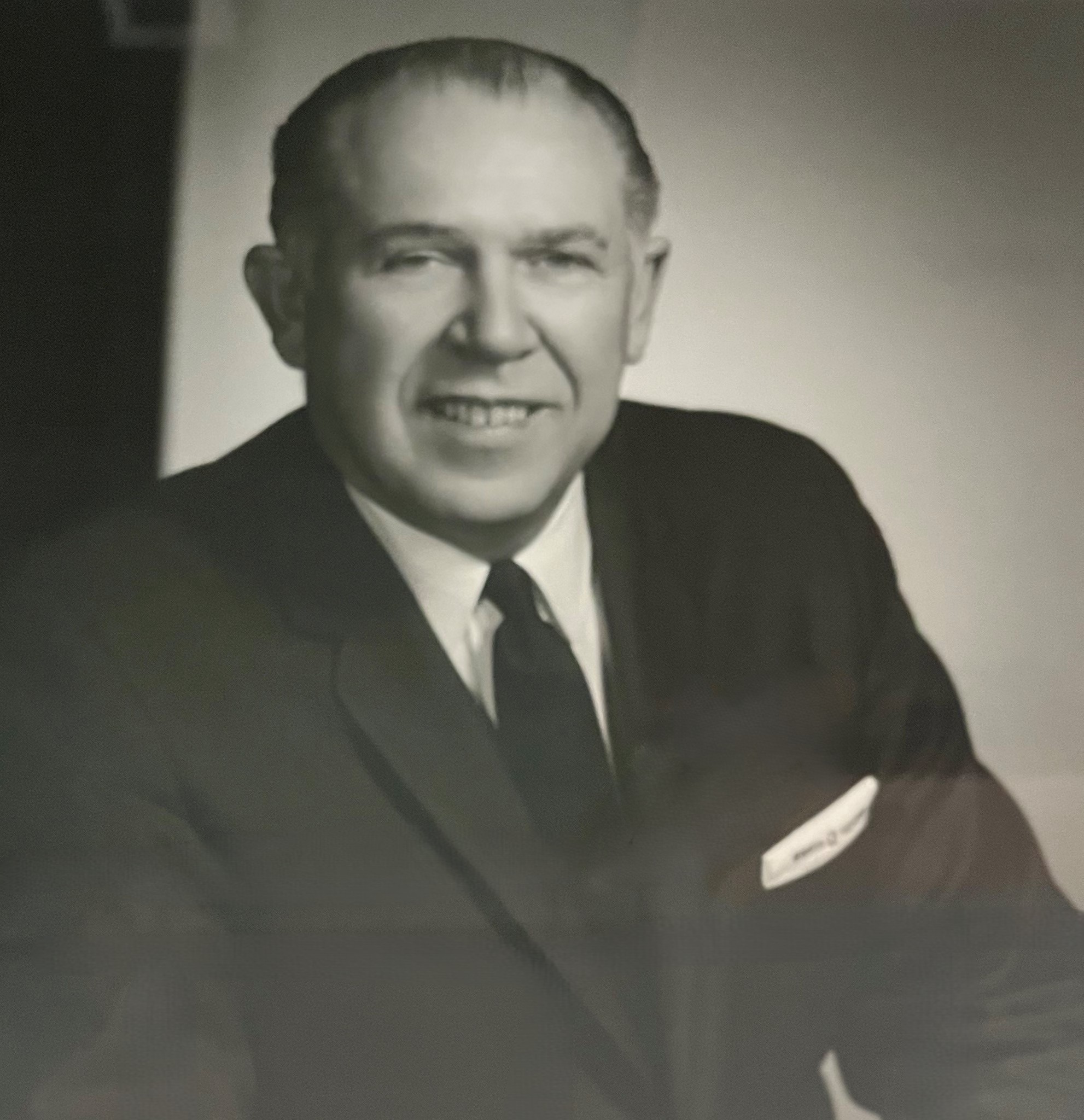
The memorial for Ray E. Durham (d. 1951) emphasized service and dedication. A resolution signed by members of the Lewiston bar recounted his military service in World War I, his graduation from Gonzaga University Law School, and his admission to the Idaho bar in 1925. Durham served as Nez Perce County Prosecuting Attorney for fourteen years and was remembered as “fearless and aggressive in the protection of the rights of his clients.” His career reflects the longstanding tradition of lawyers serving both their clients and their communities with distinction.
Even earlier figures, such as Miles S. Johnson (1871–1948), were commemorated not only for their legal work but also for their role in safeguarding public resources. Attorney Leo McCarty recalled Johnson’s appointment as Assistant United States District Attorney, where he was tasked with addressing widespread land fraud in Northern Idaho. Through persistent effort, Johnson helped “clean up” the scandal, preserving vast timber lands from exploitation. His work stands as a reminder that the rule of law often operates quietly but decisively in the protection of the public good.
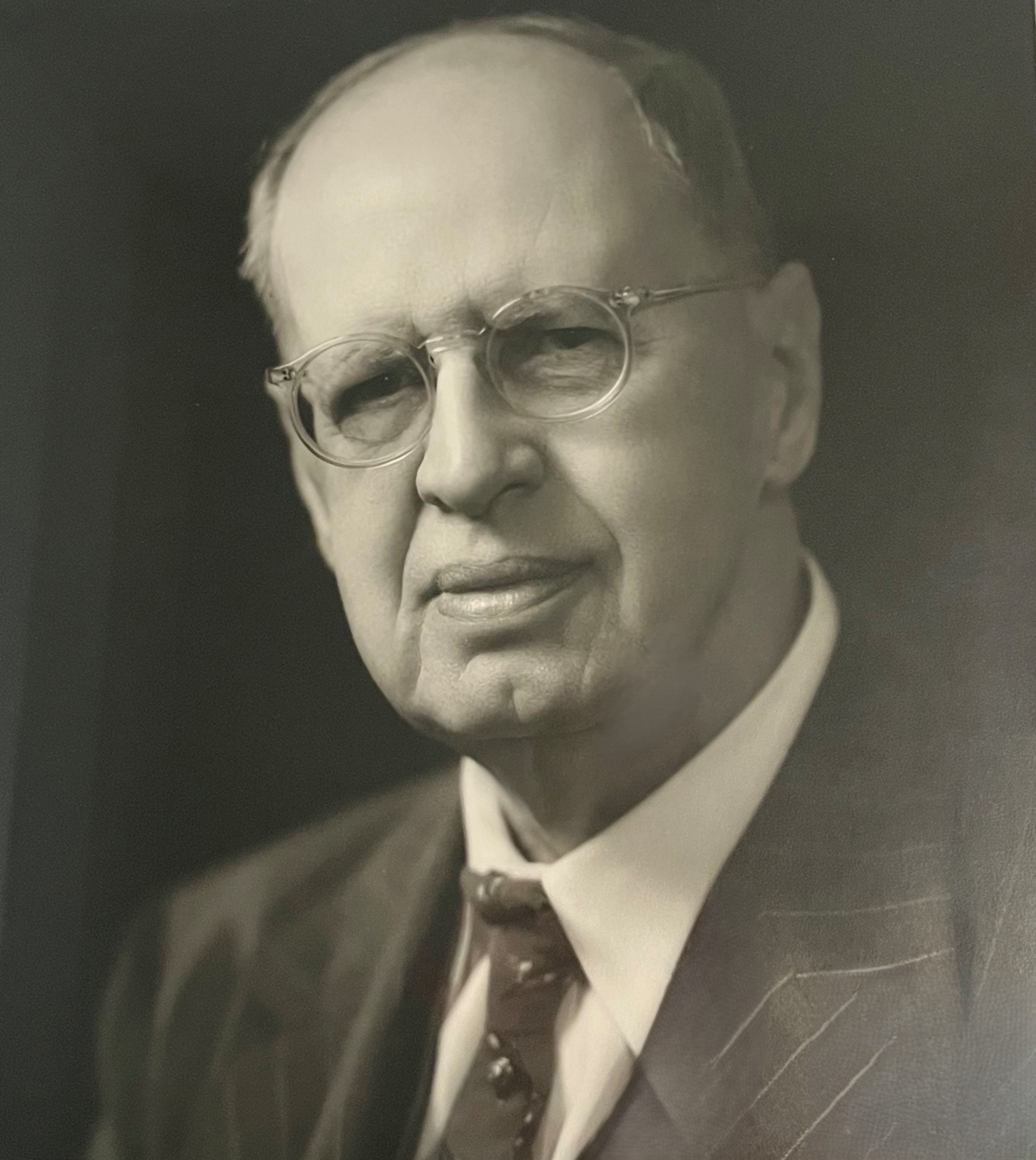
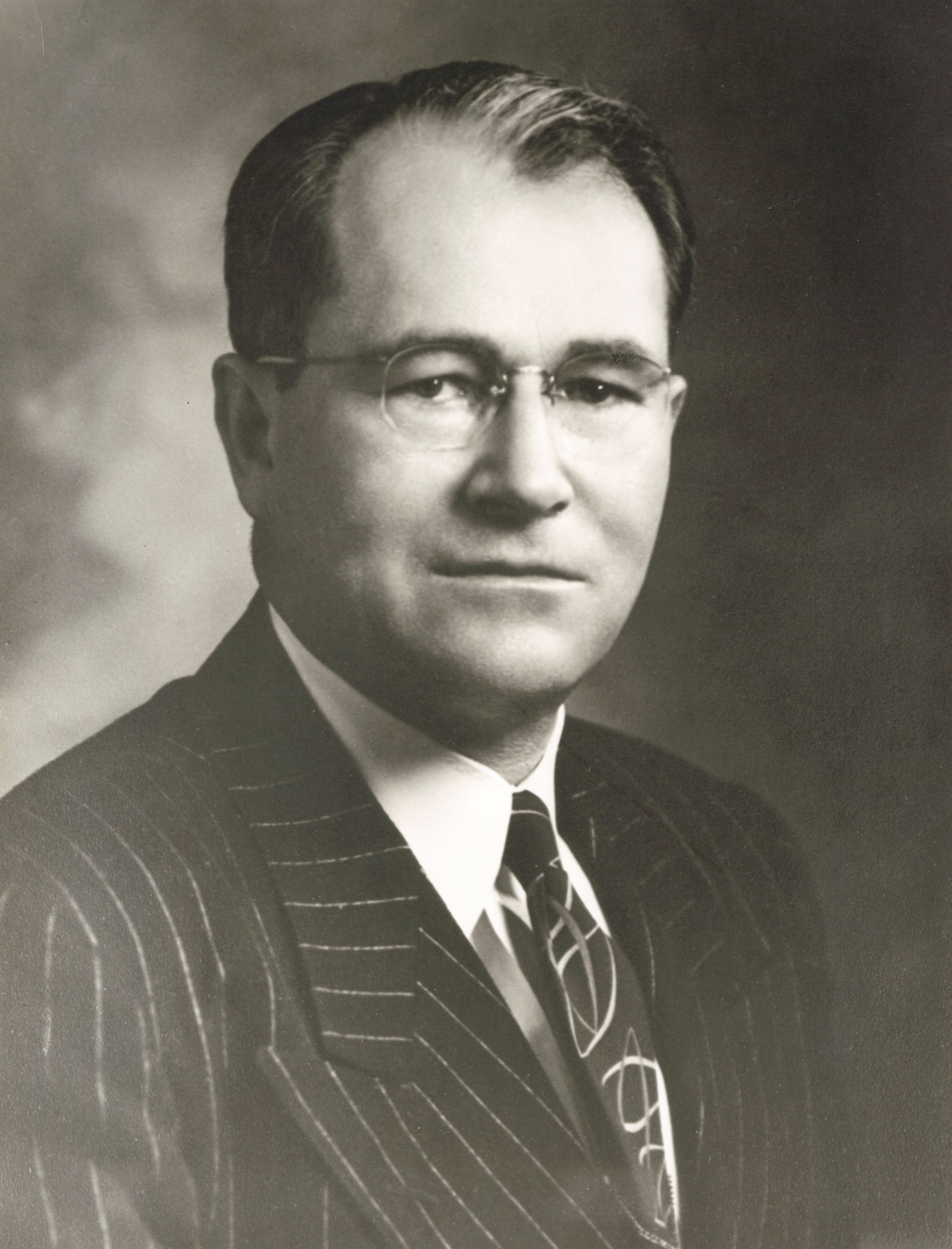
The tribute to Paul W. Hyatt (1901–1971) offers yet another perspective, one that connects individual legacy to institutional reform. Hyatt began his career with grassroots determination, campaigning door to door in Clearwater County to win election as prosecutor in 1925. He later practiced in Lewiston before being appointed to the Idaho Supreme Court in 1947 by Governor Charles A. Robins. However, his tenure on the Court was cut short when he resigned in 1949, in part due to inadequate judicial compensation.
Attorney Wynne Blake reflected that Hyatt’s resignation “stirred the bar into action,” prompting long, overdue attention to judicial salaries. Immediately after his resignation the compensation was increased to $7,500 and in the years that followed, compensation gradually increased. Hyatt’s legacy for adequate judicial compensation is still relevant today.
Taken together, these memorials reveal more than individual biographies. They reflect a culture of respect, storytelling, and shared professional identity. They capture the voices of colleagues who knew one another not only as lawyers but as people, advocates, mentors, adversaries, and friends.
The Idaho Supreme Court’s annual Memorial Service continues to serve an essential role at the statewide level. But it cannot fully replicate the intimacy and immediacy of local remembrance, the shared stories, the personal anecdotes, and the collective acknowledgment of a colleague’s place within a specific community.
There is, perhaps, an opportunity here. Reviving the tradition of local memorial proceedings by providing a forum for reflection, a repository for local history, and a reminder of the values that define the legal profession. It would reinforce civility, foster collegiality, and preserve the history of the local bar.
The records from 1946 to 1982 show that this tradition once flourished in Nez Perce County. There is no reason it could not do so again. By supplementing the Idaho Supreme Court’s Memorial Service with renewed local efforts, today’s bar can ensure that the stories, contributions, and character of its members are not forgotten.

Patty Weeks obtained her Bachelor of Science from Boise State University and Juris Doctor from the University of Idaho, College of Law. She is a licensed attorney in Idaho and Washington and currently the Clerk of the District Court, Nez Perce County. She previously served as an officer and president of the Second District Bar Association and now is a new Bar Commissioner representing the First and Second Districts. She is a lifelong resident of Idaho and lives on the family farm in Reubens
.