
Robert Aldridge Q&A

Having practiced law for over 50 years, I have a good knowledge of the stalwarts of Idaho lawyers. Bob Aldridge is a standout among those still living. Bob is the most active participant in the listserv for the ISB Tax Section, providing sage advice to those with less experience. He is a familiar face at the Idaho Legislature, having secured passage of significant legislation impacting our profession. My interview with Bob took place over many months and the final product is a proud moment for both Bob and me.
Q. I asked Bob to tell me about his early years
I was born January 30, 1945, in Bonners Ferry, Idaho. My father was stationed in Turner, Montana with the Border Patrol, but that was a very small, very isolated town and was not appropriate for the birth of a child. Currently, Turner has about 60 people and is not incorporated. My mom stayed with my family in Bonners Ferry. Later, we moved back to Turner, then Porthill, Idaho (the entry point from Canada, north of Bonners Ferry). In Turner I was a moneymaker for my parents. The only real building in town had the hotel, bar, barber, and post office. When I was taken in to get a haircut, I would howl like a banshee and all the drunks from the bar would wander over and give me coins to make me quit. The town was 12 miles south of the border point.
Almost all my family were teachers or administrators in the school system or the political system. I have done considerable research on my family history, going back in some cases to near the first century BC, and we are remarkably free of lawyers.
My family was also very involved in politics. My uncle Bob Doolittle was Speaker of the House in Idaho in 1950, so I had lots of interaction with political figures in Idaho. My dad was Boundary County Treasurer for several years. My aunt was County Assessor for a very long time.
My older sister had Down syndrome at a time when that was not very well understood. She died in 1948 during a tonsil procedure, the relationship between Down syndrome and anesthesia was not known. I suppose that is one reason I got into the protection of disabilities pretty early. I was her protector so she was not picked on, and I learned to take on kids twice my age if they started anything. My mom could not talk about Karen until she was in her 80s, she felt guilty and somehow at fault.
Q. I asked Bob to talk about his law school experiences
I went to law school out of the clear blue really. No one in my extended family practiced law. I took the LSAT very late. I achieved what I understood to be the highest score Idaho had to date. Many law schools opened up to me, but only a few had scholarships left—I was poor as a church mouse. Washington University in St. Louis had reserved a Northwest scholarship and gave me a full ride. My fiancée Kim was able to transfer to University of Missouri-St. Louis. Columbia Law School gave me a scholarship, but the New York area was too expensive for Kim. So off we went to St. Louis.
My extended family is pretty close, so I informed everyone of my new plans to become a lawyer. One of my aunts, who could be blunt, exclaimed in horror, ‟You can’t do that. You’re a nice boy!”
Law school was a totally new experience. I had never lived in a big city before, just Bonners Ferry and Moscow. The University of Idaho had given me an excellent background in English, history, and other fields so I felt prepared. I was excited about a totally new path to my life in a completely different area of the U.S. At law school, my favorite professor, David Becker, steered me to a love for estate planning. He was also on a summer fast-pitch softball team, sponsored by a big downtown law firm. They were pretty bad and had not won a game for a long time. I pitched in those days. While I was waiting for Kim to finish up after my graduation, I pitched five or so games for the team. We won them all. I received a big job offer from the senior partner of the law firm, but I was not interested in staying in St. Louis.
Washington University gave me a very high-quality education. They prepared me well for a legal career. I was glad I went to a big city like St. Louis to see why I did not want to be there permanently. I also got a very new experience with different cultures.
Q. I asked Bob to compare law school then versus now
The first major difference is in male-female ratios. There were only a handful of females in my class. Now a majority are female. Second, there were far more international students at Washington University Law School. Third, there is more emphasis now on real-world training. We were mostly very academic. There was no teaching on how to start a practice, how to handle court, or really anything about the outside world. Now, many local law firms hire student interns and use other programs, like mock court trials, to provide practical skills.
Another difference is in how classes were run. In my day it was very strict and formal, sort of like the movie The Paper Chase. You recited in a specific manner on case analysis. If the teacher thought you did not do well, they would attack in response. If you did not respond properly to that, you might be kicked out of the class for that day. If you missed three classes in a subject in a semester without valid excuses, you flunked. The grading system was weird—55 to 90. One criminal law teacher was famed for handing out 55s. We got him cufflinks formed as 55s. The pressure was extreme. You were given far more to prepare for than you could reasonably handle. I did numerous recitations reading through peripheral vision from my open book on my desk and creating the analysis as I went, reading ahead of where I was talking. Grades were totally based on final exams, so there were no guarantees whatsoever during the semester. Finals were often straight through all classes back-to-back, two-a-day. There were no computers, of course, so all notes were handwritten and the textbooks were big. I typed my finals on a portable typewriter because my handwriting was as atrocious then as it is now.
Another difference is summers. There were no summer classes of any kind. We played sports, worked, and did whatever. Now summer activities and classes are offered.
Q. I asked Bob to tell me about his experience as a judicial law clerk
I started by clerking for two years at the Idaho Supreme Court for Justice Alan Shepard. My expectation at that time was that I wanted to be a judge. After seeing what that entailed, I changed my mind. But it was a great experience. I saw legal decisions firsthand, including all the politics and personalities. One of the judges at the time was an alcoholic and was in the process of being removed from the court. The chief justice had two clerks, and the others had one each. We clerks were very close and did a lot together. We played a lot of basketball at the Y.
The first Christmas, I talked to the clerks and judges and court personnel about how in Bonners Ferry we always went caroling from house to house during Christmas week. Everywhere we went, the people would give us some food and drinks and would join us. Everybody loved the idea. Unfortunately, the first judge gave us pretty stout drinks (but some great seafood soup) and so did the next judges. The third or fourth place was supposed to be one of the court staff. We were singing away mightily, but no one came to the door. I stumbled up to the door and beat on it, bellowing out for them to come out. Then I looked through the window and huddled in the far corner was an elderly couple in utter terror. Wrong house. We fled. That was the end of annual caroling.
We were very close to the judges. We did social things together. I did taxes for several of them. I also helped on the side when Alan went through his divorce. The clerks also kept track of each other for years. The clerks, some attorneys, and judges formed a slow-pitch softball team. The judges were used to their views being law. All of us attorneys knew every rule in the book and a bunch that weren’t. We were terrible to play against. Finally, the judge who was pitching in a game decided he wanted a new ball. The ump said no and the judge threw the ball into the adjacent field. The ump kicked us all out. We filtered out to other teams and were fine. Never put lawyers in a pack.
Q. I asked Bob to tell me about his law practice
After clerking, I went to a large law firm. I did not like it. There were far too many politics and personalities. Looking back, I did not get the help I needed but probably also did not ask enough for help. Then I went to a small firm. It turned out the managing partner was stealing funds, but that was not found until years later. But I was still not satisfied. On the week that Nixon resigned, I was in Bonners Ferry. When I came back, at the front door of the office my brain said, ‟I don’t want to go in,” so I quit. It took me several hours before I could get the courage to call Kim to tell her. I found out that she had been trying to figure out how to tell me that I needed to quit.
I went out on my own. The first day, while still inside the office cleaning out my desk, a large distributing firm from Salt Lake City tracked me down. I had done work for them at the large firm, and they wanted me to do their Idaho work. Then IBM called that same week and asked me to do their Idaho work, mostly collections. I was busy immediately and never caught up since. Initially I had my office in my home for three years. I found out that people assumed you were always there and you knew when the commercials came on—there were only three stations in Boise as I remember—because the phone would light up. That allowed me to get established enough that I rented an office on South Sixth Street. I saved up and then bought my current office on North Eighth Street in an 1895 Victorian. The North End then was not a destination and the office was very cheap. It took a lot of work to fix it up properly, which is still ongoing. I have been on my own ever since. Kim has been my office manager since 1974.
In the large firm, I did several Supreme Court presentations. I also did arguments in an interesting case where the State of Idaho was trying to get information from real estate contracts held in banks, for assessment values, but was not allowed by statute or rule. So, they went to a small bank branch in St. Maries and tried to get them to hand over all escrows. We stomped them.
On my own, I did a lot of courtroom work in the early years. Like most beginning solo attorneys, I took everything that walked through the door. I never lost a criminal case but figured out that I was not helping them get out of crime, just making them decide that I could get them out of anything. I got out of divorce practice pretty early since it was too emotionally draining. I talked most of them out of divorce. I had some contested cases go to court.
On my own, I have had several cases go to the Idaho Supreme Court. My most satisfying case was when the Idaho Industrial Commission tried to force churches to get workers’ compensation. It was not allowed under the statute at the time. They went to the smallest church they could find (about 11 members, mostly the minister’s family) and demanded that they pay workers’ compensation. Their state senator referred them to me. I got another attorney to help, and we fought all the way to the Idaho Supreme Court. We had won at all levels before that. The Idaho Industrial Commission was trying to say that church services were services as that word was used in the statute and the donations were ‟fees for services.” The attorney for the Idaho Industrial Commission had brought his entire office to listen, apparently thinking he would show, by his brilliant arguments, how he would turn the case around. He got his initial ‟My name is and I represent the Idaho Industrial Commission” out and never said another word other than yes or no. All five judges in a row jumped right into their questions. When it was my turn, I said that the Court had very adequately stated our case. When the judges went by to shake our hands, one said, ‟You were brilliant.” Of course we won unanimously. I then worked with the legislature to add nonprofits to workers’ compensation.
Q. I asked Bob to describe some of his most memorable cases
One of my favorite cases was the library books case in the early 1970s. Boise City laws on library books and returns were routinely ignored. So, they decided to go after the next non-return with guns-a-blazing. My client, was a little Italian lady about 4’11’, who did not speak English very well, worked as a waitress, and lived in Boise. Her daughter was down from the University of Idaho for summer and borrowed her mom’s library card. Her mom didn’t know that some books were never returned while her daughter was away at school. The police showed up at her house and arrested her with cameras and press. I looked at the statute which only applied if it was you who checked out the books. I went to the city attorney to tell him that I was fully behind enforcing library book cases, but this was the wrong case. He pounded his desk and shouted that if we didn’t prosecute crimes at this level, ‟the next step is murder.” So off we went. At the trial, the deputy attorney suddenly realized that one of the exhibits did not have the proper chain of custody and he would have to testify. I promptly moved to exclude witnesses from the courtroom, and the judge granted it with a big smile. The attorney had to haul in someone from the office who had no clue about the case and then tried to signal through the window in the door. Total circus. We won with the judge saying some pretty harsh words about wasting court time. So, do they quit? Of course not. They re-arrest her under a statute that only applies to credit cards. Another total circus and we win again. Then I sat down with the Library Board and wrote up a good statute.
Another memorable case was a pro bono case defending a boys’ ranch in the Owyhee Mountains in the mid-1980s. I was going down to the office at nine at night and working until the early hours and then back home for a few hours of sleep and then back to office for regular work. I was in the ranch’s Cessna trying to land at Murphy, sitting in the co-pilot seat, for a court hearing. The plane crashed into the hillside. I should have been dead. An FAA investigator said there was no place for me to be on the plane. I raised my left arm to cover my face, and the entire plane went around under that arm. I opened my eyes. I was hanging upside down with gas running down me right next to a turbocharged very hot engine. My first words were ‟This is not Heaven.” My left arm was open down to the bone from thumb to elbow. I knew that my piano playing using my left hand was over and came to terms with God about that. It took 45 minutes to get me out. But it closed down the case perfectly—too long to explain why and some of it confidential. One of the times I think God stepped into my life and solved problems I couldn’t. I still argued some with God about the need for that particular method though.
Q.I asked Bob to share his thoughts on the Idaho Judiciary
The judiciary has changed dramatically. When I started, we had lay judges, especially for traffic, and justices of the peace as judges. It was a very seat-of-the-pants approach in many cases, especially in small towns. There was little training then. Now judges are often more experienced. Court results were often very random and unpredictable in the early days but are much better now. The system now is very professional and ethical. Judges are well-policed and trained. We are short on judges and courtrooms. By and large the electronic methods have worked for the general practice. Being able to check online on status, time periods, etc. is very handy. Being able to attend hearings remotely is also a great time saver and therefore cuts bills. But sometimes remote hearings are difficult because of the inability to fully see how others are reacting.
When electronic filing and elimination of paper files were set up, nobody asked us in the probate and conservatorship and guardianship areas about what we needed. At the first training meeting, I went and started asking questions and was told to submit a memo. Five pages of the problems we had to solve. It is still a bit of a pain to submit an original Will/Codicil to the Court and to get paper Letters certified. Filing original Wills has greatly slowed down the process of getting a probate in place. Sometimes e-filing seems to not work correctly in general or rejects a filing for reasons that are not clear.
That is part of the process that doesn’t work. It simply takes too long to get a case filed and through hearings to trial and completion. There have been limits placed on discovery to try to speed things up, but only partial success. Computers have given the ability to wage legal wars with relative ease.
I asked Bob to describe his work on the Idaho State Bar Practice Sections
I am the past chair and current treasurer (apparently for life) of the Professionalism and Ethics Section. I was part of the committee looking at possible changes to rules on discrimination but ended up being shot down by the Supreme Court on technical issues. It took two years to get through the resolution process. It is an excellent section that holds ongoing CLEs on alternate months that are free to members. Everybody in the Bar should be a member.
I was a charter member of the Taxation, Probate & Trust Law Section and past chairman. I am permanent Legislation Committee Chairman. We passed a lot of bills through the Committee in its early days. It is also a great section, the listserv is a huge vehicle for exchanging ideas, solving problems, and getting knowledge from us old guys to the younger members.
As noted above, the Tax Section has a very active and very useful listserv. It is a way for the community of attorneys to exchange information, forms, ask questions, look for lost Wills, and a host of other uses. It makes mentoring other attorneys in that field of law much easier. It is also a way to make sure attorneys are aware of changes in law, court rulings, IRS results, etc. I have talked a lot of young attorneys into joining and it has been a Godsend for them. It also gives me a chance to whine about attorneys not checking the Will Registry or entering their Will information into the Registry. We have a private Medicaid listserv. My understanding is that some other Section listservs are also very good.
Additionally, I am a Charter Member of the Technology Section. Another excellent section with thorough CLEs with a focus on the use of AI in legal analysis and research which can be a land mine if not handled properly. They put out a lot of documents and articles.
Q. I asked Bob to discuss his involvement with other legal organizations
When it was formed, the Taxation, Probate & Trust Law Section created committees. One of them was the Legislation Committee. I was and remain chair of that. In the early days we did quite a number of statutes. For example, we did the repeal, prospective only, on common-law marriage, which took two sessions. We did a lot of cleanups in the probate code and some in the tax code. We created Delegation of Parental Authority, originally for Operation Desert Storm in 1991, but later used extensively by grandparents and others. We did nomination of a guardian in a Will for a minor child, later expanded to include a disabled child. We did the statutes to transfer adult conservatorship and guardianship cases to Idaho.
We did that until 2004 when the rules on lobbying changed. I formed the Trust & Estate Professionals of Idaho (TEPI) in 2004. Initially, it was mostly attorneys from the Tax Section but soon added a lot of other entities and people, including bank trust departments, CPAs, and social workers. I have done hundreds of bills since then, including some major reforms. I have been chairman since its formation. We create subcommittees for separate potential bills. Most recently we did the Conservatorship and Guardianship Act restatement, 111-paged bill, that took six years to complete, with many stakeholders involved. Our membership varies from time to time in the upper 50s to 70s.
I have worked with the Uniform Laws Commission for decades. We have done a lot of statute changes, sometimes a whole replacement, with ULC acts. Transfer of an adult C&G to Idaho became a new chapter in the probate code. We have also had requests from the ULC to use our language, including recently giving Michigan our C&G bill language. Some small acts can often be used with only minor changes. Larger bills often require a lot of scrutiny and changes. For example, in preparing the new C&G act, we had a lot of unique-to-Idaho wording and concepts in the probate code. Those were retained as is except for numbering or cross reference. Some wording in Idaho we liked better than the uniform act.
I have testified/presented on behalf of hundreds of bills before the Idaho Legislature. I have testified twice before the U.S. Senate Special Committee on Aging, both times on protection of the elderly, C&G laws, etc. I have been an expert witness in multiple cases. I have appeared before multiple boards.
I asked Bob for his advice to practicing attorneys
My advice would be to structure your career around family and friends so that none are cut short. There are too many workaholics in law practices that can lose family. Always leave time for vacations, times with just family, friends, and hobbies.
Learn to listen. Let clients talk. Often the problem is not what they or you thought it would be. But by having a listening ear the true problem will surface. They will also feel involved in the process, a key to them buying into solutions.
Never get complacent. Explore new ways to do things but for efficiency, not novelty. Be ready to listen to staff and encourage open dialogue on issues, problems, and innovations.
Find the field you love and stay there. We are specialized now. You need to be good at something. Only remote small-town attorneys can have a general practice. Too many fields are getting complex, with hidden pitfalls. Be friends with other attorneys who specialize in a field you may be bumping up against to ask about problems and solutions. The Idaho State Bar is very collegial and willing to help others.
One of my passions outside the law is hockey. I played goalie from age 38 to 80, and during that time won the Winter Games one year playing for firefighters. I won an Ice World league one year and was once featured in an issue of USA Hockey magazine. I loved playing hockey, especially mentoring beginners.
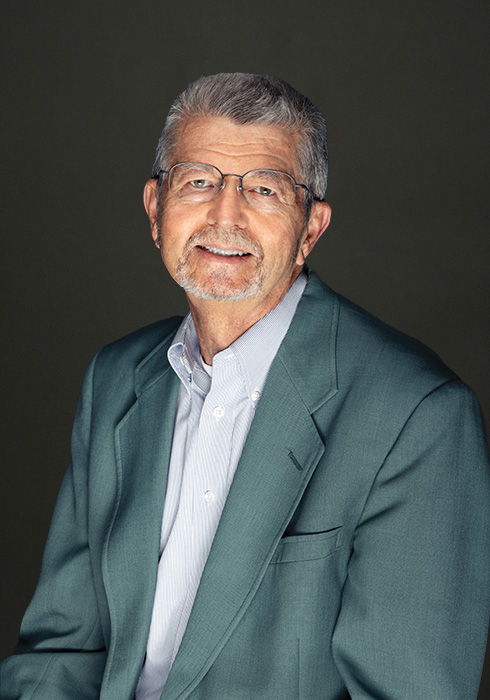
John McGown Jr. has practiced with Hawley Troxell since 1982 and has been a member of the Legal History Section of the Idaho State Bar since its inception. He has taught tax-related subjects as a professor for the Boise State Graduate Tax Program as well as both a visiting and adjunct professor for the University of Idaho College of Law. He is one of a handful of people who has summited both Mt. Borah and McGown Peak.