
Range Wars in Idaho: A Long Shadow Across the Open West by Susie Headlee
Author’s Note – This article is written in memory of Ivan Doig. I have read nearly every book he wrote and own most of them. Doig had a rare gift: he treated the landscape as a character, weaving together history, memory, and place into something that felt authentic rather than staged. His work has shaped my perspective on the West, and this piece carries a thread of that influence. In that sense, I’ve always considered him the patron saint of place-based Western storytelling.
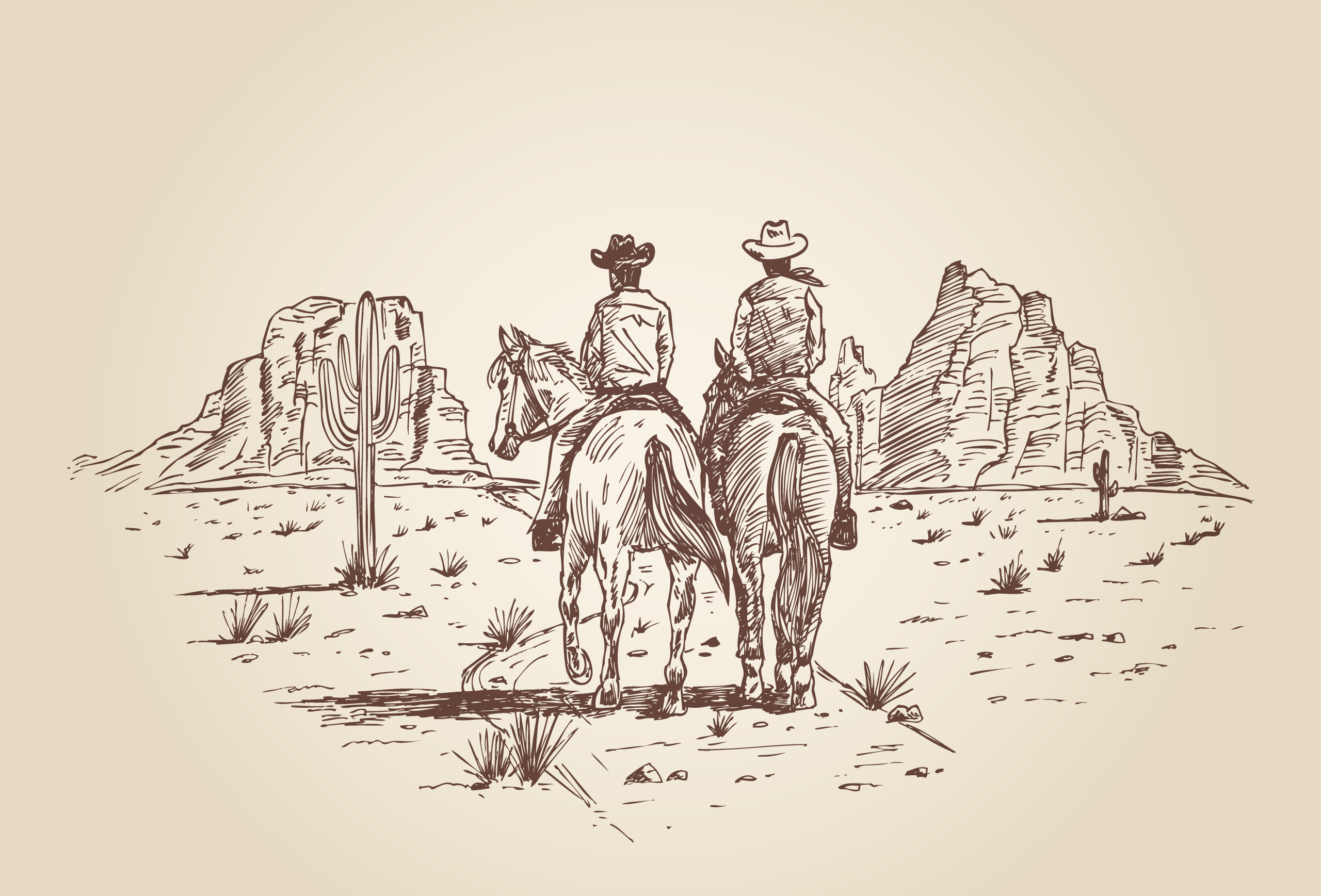
Across Idaho’s high-desert plateaus, basalt canyons, and wind-shaped rangelands, the story of the American West is written not only in pioneer journals and mining claims but also in the long, bitter fight over grass. The “range wars”—shorthand for clashes between cattle and sheep ranchers—were never a single war. They were a patchwork of local feuds, territorial standoffs, and sometimes deadly confrontations that shaped the region’s culture, economy, and land-use patterns.
Idaho’s conflicts were among the most intense in the West. From the 1880s through the early 1900s, the state’s rapid settlement, rugged terrain, and competing ideas about land use created a volatile mix. Families were displaced, livestock were slaughtered, and entire drainages were off-limits, depending on who held the upper hand that season. The echoes of those tensions still surface today in debates over grazing rights, public land management, and rural Idaho’s identity.
In the late 19th century, Idaho’s rangelands were largely unfenced and governed by a “first-come, first-served” ethos. Cattle ranchers, who had arrived earlier and often wielded political influence, viewed the open range as theirs by right—an extension of their herds and their identity as the West’s characteristic stockmen.
Sheep ranchers and herders, many of them Basque immigrants, arrived later, though their significance and power grew correspondingly. Sheep were mobile and efficient, able to graze land cattlemen considered “theirs,” including higher elevations and more fragile forage. Cattle and sheep ranchers collided, both factually and politically, setting the stage for conflict.
Long before the violence peaked, Idaho courts were already being asked to resolve disputes. In McGinnis v. Friedman,[1] the Idaho Supreme Court (then known as the Idaho Territorial Supreme Court) addressed an early example of cattle-sheep conflicts that reached the judiciary. The Court held that because the cattle rancher had no property rights, having failed to show prior possession or a claim of right to title, an injunction was inappropriate. Therefore, lacking “any clear legal or equitable right to the pastures grown upon the said lands,” the Court affirmed the lower court’s dissolution of the injunction previously asserted against the sheep rancher.
Cattle ranching was woven into the mythology of the West—cowboys, roundups, and the open range. Sheep herding, by contrast, often carried a stigma. A common belief was that sheep “ruined” grazing land. Some with that view had ecological roots: sheep graze closer to the ground and can clip plants down to the crown, especially in overstocked areas. By contrast, however, others argued that cattle, heavier and less nimble, tend to concentrate near water sources, compacting soil and potentially damaging riparian zones.
In truth, both species can degrade land under poor management—but in different ways. In the late 19th century, ecological nuance coupled with economic and political power created conflict. The cattlemen’s ecological argument became a political tool, reinforcing their claim to priority use.
Flashpoints: Idaho’s Most Notorious Range Conflicts
Between the 1890s and the early 1910s, the Salmon River and Cassia County areas experienced some of Idaho’s most intense range conflicts. Sheep herds were burned or driven out of entire drainages. Camps were destroyed. Herders were threatened or assaulted. Some families packed wagons at night and left before trouble could catch up, leaving behind cabins and equipment and sometimes burying valuables in haste.
Basque immigrants played a central role in Idaho’s sheep industry. They brought expertise and endurance, but they also became targets. During the height of the range wars, Basque herders were harassed, threatened, and sometimes attacked. Their camps were burned, their sheep slaughtered, and their movements restricted by informal “deadlines”—invisible borders that cattlemen enforced with rifles.[2]
Some Basque families hid valuables in remote canyons before fleeing the violence, leaving behind countless tales of buried treasure that still echo through Idaho folklore.
The violence and vigilante “deadlines” eventually pushed Idaho lawmakers to act. Late in the 19th century, the legislature enacted “sheep-segregation” laws that made it a misdemeanor for sheep to graze on land previously used by cattle.[3] These laws did not fully resolve the conflict, but they did, to some extent, codify the cattlemen’s advantage. What had been enforced with rifles was now backed by a statute intended to limit or eliminate the violence.
Violence on the Range: The Deep Creek Murders and Diamondfield Jack
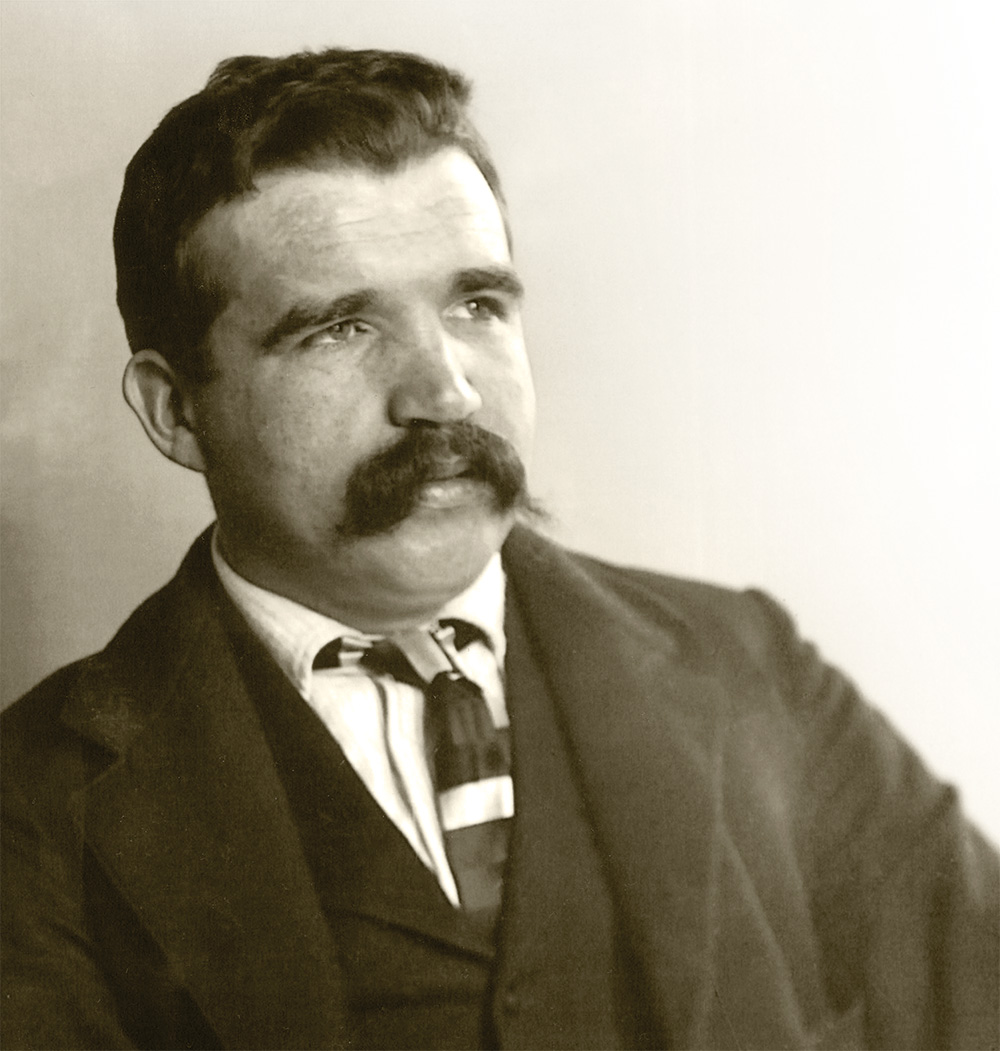
If one story captures the lawlessness of Idaho’s range wars, it is the saga of Jackson Lee “Diamondfield Jack” Davis, a hired range detective whose name became synonymous with the era’s violence.
In 1896, two Mormon sheepherders — Daniel Clay Cummings (others have spelled it Cummins in family background), and John Carruthers Wilson — were found shot to death near Deep Creek in southern Idaho. The killings occurred in a region where cattlemen had drawn a hard “deadline” forbidding sheep from entering cattle country. Suspicion quickly fell on Diamondfield Jack, who worked for cattle interests and had a reputation for intimidation.
His trial became a public catharsis—a way for the community to believe the violence could be contained if only the right men were punished. Years later, two other men, James Bower and Jeff Gray, confessed to the killings, and the foundation of the conviction crumbled. Diamondfield Jack’s eventual pardon exposed how fragile justice had been in a landscape where intimidation, loyalty, and land-use politics shaped so many decisions. Diamondfield Jack wasn’t the cause of the conflict; he was its creation—a product of a world where the line between frontier vengeance and formal law was perilously thin.
As violence escalated, lawmakers repeatedly stepped into the fray. A pair of cases, State v. Horn[4] and State v. Omaechevarria,[5] involved sheep ranchers charged under Idaho’s “sheep-segregation statute.” In Horn, the Court expressly evaluated constitutional and other arguments against the statute, found it constitutional, and held that the legislature was free to choose cattle-ranching interests over sheep-ranching interests.
Notably, the Idaho Supreme Court in Horn compared the clash of interests between cattle and sheep ranching with the clash between sheep ranching and farming—both in Idaho and in England during the reign of Henry VIII.[6]
With the dramatic influx of sheep in England at the time, the farming industry suffered—resulting in laws that “no person shall have or keep on lands not their own inheritance more than 2,000 sheep.”[7] This analysis led the Court to recognize and confirm the legislature’s authority to subordinate one industry to another through its police power. Id.
In 1918, the U.S. Supreme Court affirmed the Omaechevarria decision, holding that: 1) the state’s police power extends over the federal public domain at least where Congress has not legislated; 2) segregating sheep from cattle was intended to preserve the peace and was not an unreasonable or arbitrary exercise of police power; 3) the statute did not violate the Equal Protection Clause; 4) the statute’s enforcement did not violate due process; 5) the statute did not conflict with laws preventing unlawful occupancy of the public lands; and 6) the statute did not conflict with any rights of citizens of the United States.[8]
The rulings did not end the conflicts, but they formalized some of the power dynamics that had fueled the range wars, embedding them in Idaho’s legal landscape. Although the legislation and related case law were designed to limit violence and codify the legal framework underlying the range wars, disputes and sometimes violence persisted for a time.
The Aftermath: Law, Land, and Legacy
By the early 20th century, the federal government began asserting greater control over public lands. The creation of the U.S. Forest Service in 1905 and the Taylor Grazing Act of 1934 introduced grazing permits, allotments, and enforcement mechanisms that further reduced, though never fully eliminated, disputes on the open range.[9] Generally, the era of vigilante deadlines gave way to paperwork, maps, and administrative appeals.
In Idaho, the range wars left deep cultural grooves. Cattle and sheep ranchers remember the range wars, particularly the violence and the challenges their families weathered. All parties to the wars faced hardships to their livelihoods, herds, and sometimes their personal safety. Basque families and sheep ranchers remember the discrimination their ancestors endured—the burned camps, the threats, the long nights spent listening for hoofbeats that might signal trouble. Cattle families and cattle ranchers also faced threats, challenges, and lawlessness, even when some of the laws should have prevented it.
Tales of hidden treasure, abandoned wagons, and midnight escapes still flicker around kitchen tables and at branding fires. And through it all rides the legend of Diamondfield Jack—his name drifting through Idaho folklore like a ghost rider skimming the rim of the Snake River Canyon.
Today, conflicts rarely involve gunfire, yet the themes remain familiar. Ranchers still clash with federal agencies over grazing permits and land-use restrictions. Environmental groups challenge grazing practices to promote habitat restoration and wildfire prevention, often pushing back against development they believe threatens the long-term health of public lands. Debates over predators, water rights, and the health of public lands flare up with the same intensity that once fueled standoffs on the open range.
Beneath every hearing, lawsuit, and community meeting lies the same unresolved question that haunted Idaho a century ago: who belongs on the land? Who claims the land, who must yield, and who gets to decide?
Conclusion
Idaho’s range wars were never just about cattle and sheep. They were about culture, power, belonging, and the fragile ecology of the high desert. They led to violence and displacement and, eventually, statutes and legal decisions that still influence land-use policy today.
The range wars remind us that the West was never as open as the myth suggests—and that the struggle over grass, water, and identity continues to shape Idaho’s story. Today, the conflicts are guided more by the courts and statutes than by gunfire, but the rule of law now bears the burden of keeping the peace and determining who gets to do what on the land.
Thanks to Douglas A. Werth, Lead Deputy Attorney, Office of the Attorney General, who had the concept for this article.
Susie Headlee retired in July 2026 after more than eleven years as Director of Recruiting & Legal Services at Parsons Behle & Latimer. Prior to joining Parsons, she held positions within the U.S. Federal Judiciary at the Ninth Circuit Court of Appeals and the U.S. District Court for the District of Idaho. She is a founding member of the ILHS and served twelve years as its Secretary | Treasurer.
[1] McGinnis v. Friedman, 2 Idaho 361 (1888).
[2] Idaho State Historical Society, “Basque Sheepherding in Idaho,” ISHS Reference Series; and “Range Conflicts in Idaho,” ISHS Reference Series.
[3] I.C. § 25-1907.
[4] State v. Horn, 27 Idaho 782, 152 P. 275 (1915).
[5] State v. Omaechevarria, 27 Idaho 797 (1915).
[6] Horn, supra. 152 P. at 278.
[7] State v. Horn, 27 Idaho 782, 791, 152 P. 275, 278 (1915).
[8] Omaechevarria [sic] v. Idaho, 246 U.S. 343 (1918).
[9] 16 U.S.C. § 472 et al.; 43 U.S.C. § 315 et al.