
When My Signature Altered Outcomes: Building Credibility as a Female Attorney in Rural Practice by Jessica Perez

The day I passed the bar, I became a lawyer. The day I successfully tried my first case, I became one in the eyes of the judge. In between those two distinct moments, I learned that credibility in a courtroom is not automatic, it is tested and earned through the crucible of trial.
When My Signature Altered Outcomes
I spent nearly 10 years as a legal assistant before becoming an attorney in Oregon and Idaho, where I now practice family law and civil litigation. During that time, I drafted pleadings, observed hearings, and helped prepare cases for trial. By the time I was licensed, I was already familiar with courtroom procedures and the practical realities of litigation in both Oregon and Idaho.
Not long after I began signing pleadings in my own name, I prepared a motion for entry of default in an Oregon divorce. A nearly identical motion, prepared a week earlier and signed by the male managing partner of my firm, had been granted. Mine was denied for failure to attach a Servicemembers Civil Relief Act certificate. After adding the attachment, the motion was granted. Although the lack of certificate was an admitted oversight on my part, the only meaningful difference between the two otherwise substantively identical filings was the name in the signature block.
My procedural oversight was correctly acknowledged by the judge. Nevertheless, the question is clear. Why was the exact same procedural oversight missed or ignored by the same judge when my male supervisor made it just a week prior? Could this have anything to do with bias?
Reflecting on this and other experiences prompted me to examine whether such discrepancies reflect broader patterns. Research in the social sciences has identified a phenomenon referred to as “prove-it-again” bias, a phenomenon across industries where women must repeatedly demonstrate competence before receiving the same level of trust afforded to their male colleagues.[i]
Building Credibility in a Small Legal Community
On another occasion, I had an Oregon protection order case and a divorce case involving the same parties and children. I researched the issues and discussed with my supervisor my plan to move to consolidate the two cases. We agreed that consolidation was the right strategic move. This is common practice in Oregon, and the rules strongly support it. Additionally, I had drafted similar motions to consolidate as an assistant.
I filed the motion and it was denied. This surprised even my supervisor, who had previously consolidated many identical cases. The order denying the motion did not provide a rationale, and to be fair, I do not recall the reasons stated on the record. However, a separate judge who later dealt with the case, and who I had already had trials with, wondered aloud on the record why the cases had never been consolidated. I was dumbfounded.
These were not isolated experiences. While individual rulings vary, such outcomes align with studies showing that identical strategies or filings by female attorneys can face heightened scrutiny or the “prove-it-again” bias. In this context, the heightened scrutiny newer female attorneys face may not be intentional, yet it can shape how attorney credibility develops in the courtroom.
Sometime later, I had an upcoming trial against a seasoned attorney. I decided this was my opportunity to establish credibility. I overprepared—not just to advocate for my client, but to demonstrate that I was capable, reliable, and credible despite my perceived inexperience. I received a favorable ruling at the conclusion of that trial.
After that trial, something seemed to change. Judges listened more carefully to my arguments and engaged more thoughtfully with my positions. As I tried additional cases before other judges, I experienced similar shifts. Trial became not just a forum for resolving disputes, but a proving ground for credibility.
These experiences illustrate a common dynamic for newer female attorneys, which is that credibility often requires visible success in trial advocacy, a “proving ground” that may demand more from women due to prove-it-again bias. As the profession has seen increasing numbers of women enter practice over the past 40 years, data suggests that while overt barriers have diminished, subtle perceptual hurdles in building trust in the courtroom remain.
With judges before whom I have tried cases, I feel I have established credibility. With those before whom I have not had a trial, I recognize that I am still working on building that foundation. Every time I walk into the courtroom, my goal is to know that I have done my research, and I am the most prepared person in the room.
“As the profession has seen increasing numbers
of women enter practice over the past
40 years, data suggests that while overt barriers
have diminished, subtle perceptual hurdles in
building trust in the courtroom remain.”
These experiences raise a broader question: to what extent is early-career scrutiny simply part of professional development, and to what extent might implicit bias influence how credibility is initially assigned? Upon reflection and research, I have come to believe that “prove-it-again” bias has played a meaningful role in my career thus far.
Studies show that perceptions of competence in courtroom settings are influenced by implicit bias.[ii] In her article on Gender Bias in the Courtroom, Connie Lee discusses research showing that identical advocacy styles are often evaluated differently depending on the attorney’s gender.[iii] One study of note evaluated whether an attorney’s emotional expressions, particularly anger, impacted the jury’s view of that attorney’s competence.[iv] Sadly, though not surprisingly, the male attorneys were viewed as being more competent than the female attorneys when they presented as angry or firm.
A 2020 gender-based survey of over 5,000 attorneys in New York state courts revealed a stark difference in how men and women perceive the credibility gaps.[v] Among its findings was that 51 percent of female attorneys agreed with the proposition that judges appear to give more credibility to the arguments/statements of male attorneys over female attorneys. Only 13 percent of male attorneys agreed with that statement. The pattern was similar when asked if this same phenomenon occurs when the judge is female. In that instance, 29 percent of female attorneys reported that female judges do appear to give more credibility to male attorneys. Only 7% of male attorneys agreed. Approximately 35 percent of female attorneys reported that judges appear to impose a higher burden of proof on female litigants, versus 6 percent of male attorneys. Overall, the study concluded that gender bias continues to negatively impact fairness in the treatment of women in the judicial system.
The crux of these studies is that implicit gender biases have the effect of undermining the female attorney’s credibility in the courtroom. If the female attorney’s credibility is in question right out of the gate based on gender biases, this ultimately impacts the client’s ability to receive a fair trial.
A more recent study has produced mixed findings on gender and credibility. In 2024, IMS Legal Strategies conducted a similar experiment to those discussed by Connie Lee.[vi] It involved 199 participants who served as mock jurors in a fictitious toxic tort case. They watched pre-recorded opening statements and expert testimony, with either a female or male plaintiff’s counsel and female or male experts. The defense attorney was always female and the script was identical. After viewing the recordings, the participants were asked which side they favored, how they would describe the attorneys, and whether they believed there should be more diversity in the courtroom. The study found no significant difference in how the attorneys were perceived.
However, the authors cautioned that these particular findings do not mean that implicit gender biases have been eliminated from the practice of law. In fact, they note that gender research in the legal field continues to raise more questions than answers. For instance, a 2010 Politics & Gender study explored whether attorney gender is relevant to the types of cases being tried. [vii] In that study, the authors note that women are more likely to appear before the Supreme Court when the cases involve perceived women’s issues, such as reproductive rights, equal employment issues and sex discrimination. While this study helps to shed light on case-type effects and gender, important questions remain about how attorney gender operates across different litigation contexts.
Regardless of whether bias directly affects outcomes, these studies highlight how perceptions of credibility can still shape courtroom dynamics, particularly in smaller legal communities where professional reputation develops over time.
Another challenge faced, primarily in Oregon courts, is that I am addressed by my client’s surname when my client is Hispanic. While I presume these incidents are unintentional, they serve as reminders that knee-jerk assumptions still shape courtroom interactions. This ties into another concept discussed in Lee’s article, the “double bind” of race and gender in the legal community.[viii] Lee discusses some extreme examples of the double bind bias, but my anecdotal experience demonstrates that these issues still exist today. These incidents, even if unintentional, echo the “double bind” of intersecting biases discussed in the literature and highlight an area where the profession can continue to improve awareness.
Lessons Learned
These experiences have taught me several lessons that may be helpful.
- Credibility is earned, not conferred.
- Newer attorneys may face heightened scrutiny.
- Preparation is both advocacy and reputation-building.
- Implicit bias can shape courtroom perception, even unintentionally.
- Professional credibility is built collectively within the legal system.
The legal profession has made outstanding strides in welcoming women into practice. Yet individual experiences, and supporting research, suggest that challenges around professional credibility and implicit bias persist. My experiences in rural practice have shaped how I view credibility in the courtroom. I learned that while passing the bar grants a license to practice law, the credibility we need to be effective is earned over time. In smaller legal communities, that credibility often develops through trial advocacy where preparation, professionalism, and performance are visible to the court. Even with the progress our profession has made thus far, the experiences discussed in this article suggest that perceptions of competence and trust are still formed in ways that can take longer for newer attorneys, and particularly women, to establish.
For newer attorneys, and perhaps disproportionately for young women, the “prove-it-again” bias means that credibility may take longer to establish. My experiences in the courtroom reflect this exact dynamic. These experiences also reinforced the importance of preparation. Preparation became not only a tool for effective advocacy, but also a way to build professional credibility.
At the same time, these experiences prompted reflection about how we, as legal professionals, evaluate one another. Judges and attorneys alike strive to be fair and impartial, yet implicit biases can influence how we perceive credibility, experience, and competence. When pleadings demonstrate thoughtful research and sound legal reasoning, they deserve consideration regardless of the name or bar number in the signature block.
Rural practice offers unique opportunities to build relationships and professional trust. It also offers an opportunity to be mindful of how we welcome and evaluate female and newer attorneys. By recognizing our own assumptions and focusing on the merits of the arguments presented, we can build on the four decades of progress, strengthen our profession, and maintain fairness in the judicial process.
Ultimately, the lesson I learned is that credibility is built through preparation, professionalism, and persistence. Trial advocacy became the crucible through which I continue to earn credibility. The responsibility to evaluate arguments fairly belongs to all of us who participate in the legal system. This is particularly true when implicit bias might play a role that we should all recognize and seek to keep in check.
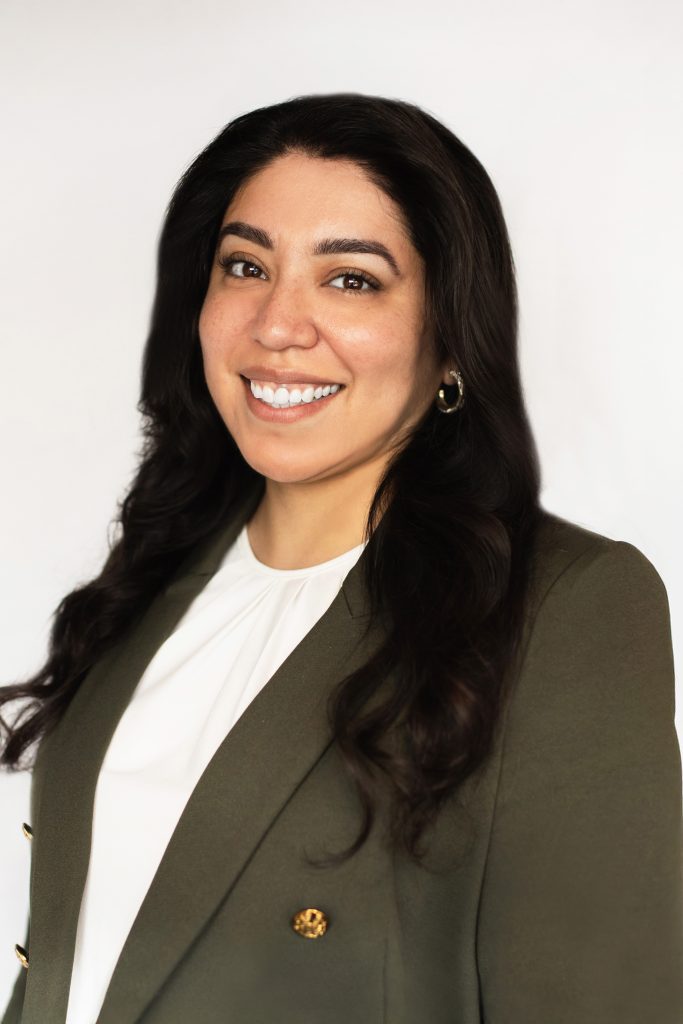
Jessica Perez is an associate at Intermountain Law, PC licensed in both Idaho and Oregon. Her practice focuses on family law and general civil litigation. She obtained her J.D. from the University of Idaho College of Law in 2021. Jessica was a family law and general civil litigation paralegal for almost 10 years prior to obtaining her J.D. That experience has been instrumental to her practice.
She grew up in Weiser, Idaho and stayed in Payette, County, Idaho. When she is not practicing law Jessica enjoys spending time with her family and pets, gardening in the summer and snowboarding in the winter.
[i] Alison M. Nelson, Spotlight on Bias. Advocate (Idaho State Bar) 62, no. 2 (2019).
[ii] Connie Lee, Gender Bias in the Courtroom: Challenges Confronting Women Litigators and Trial Attorneys, 22 Cardozo Journal of Law and Gender, Vol. 229 (2016).
[iii] Connie B. Lee, Gender Bias in the Courtroom: Challenges Confronting Women Litigators and Trial Attorneys, 22 Cardozo J.L. & Gender 229 (2016) (citing Christian B. May, Anger in the Courtroom: The Effects of Attorney Gender and Emotion on Juror Perceptions (2014) (Honors College Thesis, Ga. So. Univ.)).
[iv] Christian B. May, Anger in the Courtroom: The Effects of Attorney Gender and Emotion on Juror Perceptions (2014) (Honors College Thesis, Georgia Southern University), https://digitalcommons.georgiasouthern.edu/honors-theses/29
[v] N.Y. State Judicial Comm. on Women in the Cts., Gender Survey 2020: Women in the Courts: A Work in Progress (2020), https://www.nycourts.gov/LegacyPDFS/ip/womeninthecourts/Gender-Survey-2020.pdf.
[vi] IMS Legal Strategies, Does Attorney Gender Affect Trial Outcomes? (June 5, 2025), https://imslegal.com/articles/attorney-gender-trial-outcomes
[vii] J.J. Szmer, T.A. Sarver & E.B. Kaheny, Have We Come a Long Way, Baby? The Influence of Attorney Gender on Supreme Court Decision Making, 6 Pol. & Gender 1 (2010), https://doi.org/10.1017/s1743923x09990493
[viii] Connie B. Lee, Gender Bias in the Courtroom: Challenges Confronting Women Litigators and Trial Attorneys, 22 Cardozo J.L. & Gender 229 (2016) (citing Stephanie A. Scharf & Roberta D. Liebenberg, First Chairs at Trial: More Women Need Seats at the Table, 24 Perspectives 1, 13 (2015), https://www.theredbeegroup.com/wp-content/uploads/2020/02/First-chairs-at-Trial-FINAL.pdf); see also Am. Bar Ass’n Comm’n on Women in the Prof., Visible Invisibility: Women of Color in Law Firms (2006), https://judicialstudies.duke.edu/sites/default/files/centers/judicialstudies/panel_1-visible_invisibility_women_of_color_in_law_firms.pdf.