
Safeguarding the Right to Vote: Accessibility in the Pursuit of Equal Protection by Erin E. Tomlin
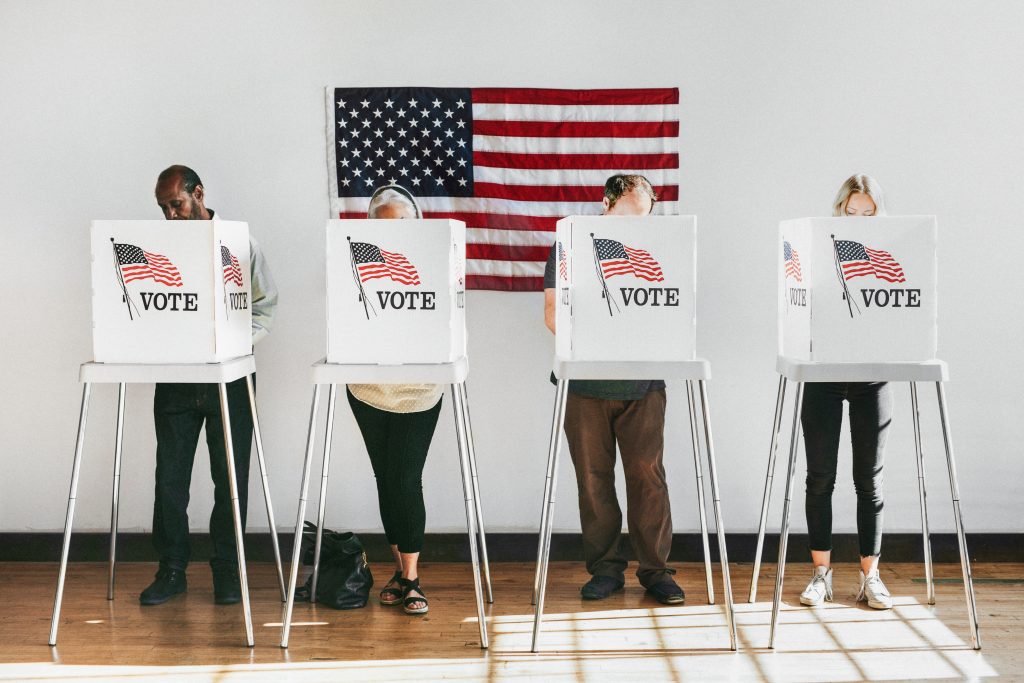
Women have long been experts on the importance of “access” and what that means to dignity, equal protection under the law, and justice. Shirley Chisholm, the first Black congresswoman, is famously known to have said, “If they don’t give you a seat at the table, bring a folding chair,” directed at women and minorities through her advocacy to eliminate sexism and racism during her career and lifetime.[i]
A Seat at the Table: The Right to Vote
The recent iteration of 2025’s Safeguard American Voter Eligibility (SAVE) bill—meant to significantly amend the National Voter Registration Act of 1993—emerged in early 2026 as the SAVE America bill, with an underlying goal: to impose additional restrictions for determining voter eligibility.[ii] The legislation is described by critics as voter suppression marketed to the American people with fear-mongering catch phrases and insufficient data to support the need for such an overhaul on voting rights in the United States, accelerating conspiracy instead of truth.[iii]
Proponents argue that illegal voting and election fraud are rampant. Data, however, does not support the proponents’ claims, which seem to have accelerated in 2016, in an unprecedented upheaval, when President-elect Trump insisted several weeks after that November’s election, “In addition to winning the Electoral College in a landslide, I won the popular vote if you deduct the millions of people who voted illegally.” [iv] As the claim evolved into a widespread message that noncitizens vote illegally in federal elections there remains a concern about how such polarizing assertions become normalized, potentially jeopardizing accessible rights guaranteed to all U.S. citizens.
Amplifying a message in support of a restrictive voting law serves as a reminder to the legal community, those tasked with advocacy and trained in objectivity and analysis, that justice and the application of law must occur prismatically. If the SAVE America bill, or any complex legal situation were a prism held up to the light, all its facets would be exposed and visually demonstrate that the adversarial two-sided nature of legal tension is often much more complex, requiring additional considerations for those willing to see them.
Is There a Problem to Solve?
In 2016, 42 areas in the U.S. with high immigrant populations were scrutinized for voter and election fraud; approximately only 0.0001 percent of votes cast in those areas were flagged as “suspected noncitizen voting.”[v] An additional 2016 election audit in North Carolina found approximately 0.00085 percent of ballots cast were by Green Card holders, or non-citizen voters, and this miniscule percentage was due to misinformation or human error, not a conspiratorial attack on election integrity. [vi]
In 2022, the state of Georgia’s elections were also analyzed. Resulting data helped determine that between 1997 and 2022, only 1,634 non-citizens attempted to vote in Georgia, but none were allowed to do so, due to regularly established election processes and safeguards already in place.[vii] Again, misinformation and human error were identified as factors rather than something else.
The recent efforts to legitimize the SAVE America bill as necessary are not supported by factual data, yet the rhetoric persists, despite its potential negative effect on certain voters. A recent study’s findings in Utah reported that one non-citizen was found on Utah’s most recent voter rolls, which encompassed a total of approximately 1.8 million other active and eligible voters.[viii]
Known in part for its disproportionate burden on married women, the SAVE America bill also included provisions more likely to affect poor people, rurally isolated people, and those whose legal name is not the same name on their birth certificate.[ix] Recent estimates indicate that 21.3 million Americans don’t have proof of citizenship documents readily available.[x] For those in favor of the SAVE America bill, it was continually touted as a necessary law to ensure that only citizens vote, despite pre-existing laws already prohibiting noncitizens from voting in state and federal elections.[xi]
“Women voters in Idaho and throughout
the U.S. belong in the poll booths without
having to bring their own folding chair.”
In comprehensive analytical review of available data, there is no evidence to suggest that noncitizens voting is a problem affecting the outcomes of elections and the overall integrity of American elections. In fact, data across various sources, nonpartisan and partisan, shows that noncitizens voting is a “non-issue”.[xii]
Similar Legislative Efforts by States
By the end of April 2026, and at the time of this writing, the SAVE America bill did not pass the Senate after passing the House in early 2026.[xiii] It is unclear whether the same impositions will be attempted nationwide by Executive Order, but the State of Florida announced passage of the State of Florida Save Act on April 1, 2026, requiring proof of citizenship to vote (which immediately was met with an opposing lawsuit).[xiv] While current litigation over very recent legislative efforts continue, history and precedence prove insightful, yet another set of facets available to enrich our collective understanding.
In Kansas, between 2013 and 2016, the Safe and Fair Elections Act (SAFE Act) was in effect, which ultimately resulted in blocked voter registrations of more than 31,000 citizens who were otherwise eligible to vote, denying them a constitutional right.[xv] This doomed Kansas law requiring voter registration applicants to provide documentary proof of citizenship (birth certificate, U.S. passport, or naturalization records) was struck down. On appeal, the U.S. Court of Appeals for the Tenth Circuit affirmed the district court’s judgment, holding that the requisite documentary proof of citizenship unconstitutionally burdened the right to vote and was pre-empted by the National Voter Registration Act (which the SAVE America bill intended to amend).[xvi] The U.S. Supreme Court declined further review of the case.[xvii]
Arizona’s House Bill 2492, a 2022 law barring Arizonians who registered to vote without documentary proof of citizenship (e.g., a birth certificate or U.S. passport) from voting for president in any federal election was ultimately struck down by the Ninth Circuit in 2025. [xviii]
A state law requiring documentary proof of citizenship for voter registration remains unconstitutional if it imposes a significant burden on the right to vote without sufficient justification. If states, regardless of any additional federal action on the topic, attempt to legislate like Florida, which Utah, North Dakota, and Mississippi also have recently done, and how Kansas tried over 10 years ago, it is a valuable opportunity in Idaho to emphasize how access to justice is a legacy worth advocating for and to reject laws that are a “solution in search of a problem” like critics of the SAVE America bill have suggested. When laws disproportionately affect the rights of a few without justification, it is alarming.
Perspective Is Important
The SAVE America bill would have required individuals in the United States to provide documentary proof of citizenship at the time of voter registration, and a photo ID at the time of actual voting.[xix] Without thinking about this from the perspective of the most affected, this may seem relatively harmless. After all, photo ID is required for alcohol or tobacco purchases, opening a bank account, picking up a package at the Post Office, or even purchasing some over-the-counter cold medicines. But, importantly, none of those activities are rights guaranteed by the federal constitution of the United States.
It’s the documentary proof of citizenship requirement during a voter registration process, as attempted to be imposed on all U.S. voters by the SAVE America bill, that is frightening for individuals most affected. Documentary proof of citizenship includes “primary citizenship evidence,” such as a birth certificate, a U.S. passport, a Consular Report of Birth Abroad, a Certificate of Citizenship, or a Naturalization Certificate.[xx] While Real IDs are assumed to be reliable evidence of primary citizenship, they do not definitively establish citizenship.[xxi] Critics have become increasingly concerned about the likelihood of a person registering to vote who has a birth certificate with one last name and an ID with a different last name.
This is a major discrepancy for people who have been married or divorced, potentially more than once, and whose last name has changed once, or several times, during their lifetime. Women disproportionately change their name after marriage.[xxii] In 2023, approximately 80 percent of U.S. women in opposite-sex marriages to men changed their name to that of their husband, whereas in the same year 92 percent of U.S. men married to women retained their last name.[xxiii]
History Is Meant to Be Learned From, Not Repeated
In medieval England, the Doctrine of Coverture was part of the existing patriarchal and common law framework foundational to this discussion.[xxiv] Coverture refers to a woman’s legal existence or identity becoming merged into that of her husband’s upon marriage, indicating a common patriarchal transfer from a father to a husband.[xxv] A married woman under this archaic doctrine could not own property, enter into contracts, or retain her own legal identity, as she was literally “covered” by the identity of her husband.[xxvi] Despite acknowledging that over 20 U.S. states still had some kind of coverture laws in place at the time of his opinion in 1966, Supreme Court Justice Abe Fortas stated, “The institution of coverture is peculiar and obsolete.” In that case, Texas law prohibiting married women from contracting or binding their separate property without obtaining a court decree removing their “disability to contract” was at issue. [xxvii]
As archaic as coverture is, many recent legislative efforts are consistent with Project 2025, written and advocated for by the Heritage Foundation.[xxviii] For example, Project 2025 prioritizes a definition of “family” more aligned with coverture principles, discrediting families with a single parent or other composure as “less than” their ideal. One of its many goals is to eliminate nearly all civil rights offices in federal agencies, which are charged with enforcing protections against discrimination on the basis of sex, race, disability, and more.[xxix] These hard-fought protections are part of a legal legacy at risk despite the progress made since the 11th century.
Change Your Name. No, Don’t Change Your Name.
The practice of changing surnames upon marriage, especially for women, is a well-established standard, even expectation, in western culture and has persisted despite women’s identities and autonomy becoming distinctly different from that of their spouse over time. Before the 1970s, women who married in certain U.S. jurisdictions were not allowed to keep their birth surnames to accomplish certain objectives, like being able to vote. Rose Palermo, a female attorney in Nashville, Tennessee, was stricken from the state’s voter rolls after keeping her birth surname following marriage.[xxx] She sued. Ultimately, the Tennessee State Supreme Court agreed with her; she became one of many women experiencing increased access and equal rights under the law during that decade.
Legal changes in the 1970s brought options where none had existed before and women experienced breakthroughs in equal protection and more equitable laws and social norms.[xxxi] Women seeking equal protection under the law and advocating for gender equality still change their name after marriage because it’s simply a popular current tradition and is an unreliable indicator of how independent or autonomous a woman is. If laws like the SAVE America bill gain traction, it could be another catalyst affecting name changes following marriage, and perhaps name changes following marriage will become less common moving forward if they create an unequal burden on certain citizens.
If the SAVE America bill passed and was not found unlawful after the inevitable lawsuits challenging its validity were filed, questions about how to navigate compliance were likely and already being asked, preemptively, pending the Senate’s actions. They included:
Do women need to also have a marriage certificate on their person to register to vote? If a person does not have a passport due to their inability to afford one, are they restricted from voting despite their established right to do as a U.S. citizen? In 2024, only 48 percent of Idahoans had a passport. More specifically, in 2024, the number of citizens without a passport in Idaho was approximately 991,000 people.[xxxii] Average costs to obtain a passport book are $165.00 before any expedited costs or photo fees.[xxxiii] For an Idahoan on a fixed income, especially if inflation, gas prices, and grocery costs continue to rise, this is a significant amount to extract from a month-to-month budget.
Impacts for Rural Idahoans and Local Election Officials
Are rural Idahoans, perhaps also elderly, more restricted from voting than before upon passage of a law like the SAVE America bill due to potential barriers in ordering these vital documents, often requiring in-person appointments at various government offices? Idaho is a mostly rural state, often defined by its vast geography. For many Idahoans, the distance to access in-person services is significant.[CC1]
Travel, age, safety, disability, and other barriers supplement opponents’ concerns for the SAVE America Bill, and similar laws, where the increased requirements extend beyond paperwork and costs. In addition to impacts on individual voters, legislators’ consequential awareness can be demonstrated through asking the right questions before passage of such a significant amendment.
The likelihood of increased waiting times for voters or bureaucratic complexities for poll workers, many of whom are volunteers, is yet another facet the SAVE America bill arguably overlooked. Do election officials, poll workers, and volunteers become underwriters of voter registration legitimacy, having to review a myriad of documents pieced together by a voter with a right, but now a burden of proof? The SAVE America bill did little to address the foreseeable chaos it would cause if it had passed. Idaho’s pragmatic history reminds us to reflect on our own data before civic volunteers and public servants must manage unnecessary chaos, all while restricting access to eligible voters, especially women and others affected inequitably.
Regarding noncitizens voting in Idaho, Secretary of State Phil McGrane reported that “Out of the million-plus registered voters we started with, we’re down to 10 thousandths of a percent in terms of this number. … This is very rare, it’s very limited,” in response to voter roll reviews and related findings of noncitizen voters in Idaho. [xxxiv]
Seeing the Forest for the Trees
For all those who sighed with relief upon the SAVE America bill’s death in the 2026 Senate, others remain concerned that the only way to prevent noncitizens from voting is to impose additional requirements in voter eligibility and registration criteria. In the spirit of perspective, it may be helpful to assess this kind of polarizing disparity as not being able to see “the forest for the trees.”
Registering to vote and voting are two distinct acts. They can be done at different times, or at the same time on election day in Idaho. For instance, illegal voting is distinguished from incidents in which noncitizen voter registration is reported, with each being subject to certain oversight and various scrutiny. These safeguards are, at both steps (the registration and the actual voting) intended to protect election integrity and ensure that applicable laws are followed. Laws that already prohibit or limit noncitizens from voting are effective, and illegal voting by noncitizens is not a pervasive or impactful occurrence.
If unfounded concern about noncitizens voting illegally is the “trees,” then entitled rights afforded to eligible voters is the “forest” here. Ensuring the preservation of rights is a noble cause, one many in the legal profession take to heart daily. Laws like the SAVE America bill that erode rights or prevent more lawful citizens from registering to vote than will prevent noncitizens from registering to vote, or voting, should be scrutinized instead of touted with the same kind of blind loyalty that one has to tacky political merch with little regard for what it may represent beyond rally cries and anti-immigrant hyperbole. [xxxv] The false claims in justification of the Save America bill are a red flag for those willing to see it.
This is especially true if the lawful citizens prevented from registering to vote are only certain groups of people disproportionate to others, people who have been historically marginalized or treated unfairly. Are Americans comfortable with restrictive voter laws, negatively affecting access to a constitutional right for themselves or their neighbor, when the data to support such change is nearly non-existent but repeatedly misrepresented as otherwise? Whether these misrepresentations have become a large-scale unifying message is concerning as the data is clear: noncitizen voting is not something America needs to be saved from as it occurs so infrequently, with no bearing on election outcomes. If motivations for laws like the SAVE America bill are rooted in anti-immigrant rhetoric, given the overwhelming insufficient data to support its overhaul on voting, what kind of beliefs does the bill appeal to?
Without Access, What Is a Right?
In 1896, Idaho became the fourth state to grant women full suffrage—the right to vote in local, state, and federal elections through a constitutional amendment voted upon by Idaho voters.[xxxvi] 24 years later, Idaho ratified the 19th Amendment to the federal constitution, which made a woman’s right to vote guaranteed nationwide.[xxxvii] In this profound early example of Idaho’s commitment to the rights of women over two decades before the federal government affirmed the same right, there may be remnants of a historical thread to pull on in safeguarding women’s access to places they belong as part of a heritage to be proud of. Women voters in Idaho and throughout the U.S. belong in the poll booths without having to bring their own folding chair.[CC2]
It remains worthwhile to call upon Idahoans, especially those who practice law and who swore the oath, in part, upon Idaho state bar admission, “I will support the Constitution of the United States and the Constitution of the state of Idaho.” [xxxviii] In celebration of the Idaho Women Lawyers’ active charter and existence for forty years since 1986, the same year that Congress designated an inaugural Women’s History Week, it remains important to protect access as much as championing the rights secured in the law to date.[xxxix]
The Idaho Women Lawyers advocates for the promotion of equal rights and opportunities for women in the legal profession but also champions those who advocate for the rights of others that are at risk of being inaccessible. Without equitable access to lawful rights, injustice tips the scales. It is this imbalance that Justice Ruth Bader Ginsburg perhaps referenced in an Academy of Achievement interview she gave in discussing her legal advocacy during the 1970s: “So I had legal education, and I could use that education to help move this movement for change, for allowing women to realize their full potential, help move that along. So it was that 10 years of my life that I devoted to litigating cases about, I don’t say women’s rights, I say the constitutional principle of the equal citizenship stature of men and women. I was tremendously fortunate to be able to participate in that movement for change.”[xl]
As proposed laws, and those enacted, enforced, and affirmed continue to reflect societal discourse, they also generate important discussions challenging us to think more critically and to weigh all pieces of information and consequential reverberations. Requiring any lawful voter to overcome access barriers for a talking point rooted in propaganda, but somehow legitimized enough to threaten the right to vote, is a lesson to learn from. Just as a prism refracts light through transparent angles, equitable access ensures seats at the table remain saved.
Erin Tomlin lives in Moscow with her husband, where they raised their three sons. She has been practicing law since 2012 and previously served as the University of Idaho College of Law’s Assistant Dean of Student Affairs (Moscow) and is currently in private practice. She loves to raft, vote, and spend time with her family and their well-intentioned Aussie named Huckleberry.
[i] A Seat at the Table, Edward M. Kennedy Institute for the United States Senate, available at https://www.bringyourownchair.org/about-shirley-chisholm/.
[ii] Nicole Hansen and Emily Burns, What You Need to Know About the SAVE Act, by the Campaign Legal Center (Mar. 18, 2026), available at https://campaignlegal.org/update/what-you-need-know-about-save-act.
[iii] SAVE America Act, H.R. 7296, 119th Cong. (2026). Proposed legislation that passes both the House and Senate becomes an “Act.” Since, at the time of this writing submission, the SAVE America Act did not pass the Senate (April 2026), it is technically a “bill” and not an “act.” This federal legislation has been widely referred to incorrectly as the “SAVE Act” or “SAVE America Act” in public forums but it remains a bill as of publication date, yet is likely to be a recurring topic for legislative or executive order discussion despite its lack of Senate approval after stalling out in the Senate during Spring 2026 due to a myriad of complexities in which voting on the SAVE America bill directly implicated other legislative actions, i.e., approvals for contested funding, etc. Caleb McCullough, SAVE Act Would Make It Harder, Not Impossible, for Married People to Register to Vote, PolitiFact, The Poynter Institute (Feb. 17, 2025), available at https://www.politifact.com/factchecks/2025/feb/17/tiktok-posts/save-act-would-make-it-harder-not-impossible-for-m/.
[iv] Donald Trump, Twitter post, Twitter (Nov. 27, 2016, 3:30 PM), originally available at http://twitter.com/realDonaldTrump, now available at http://x.com/realDonaldTrump.
[v] Christopher Famighetti, Douglas Keith, & Myrna Pérez, Noncitizen Voting: The Missing Millions, Brennan Center for Justice (2017), available at https://www.brennancenter.org/media/256/download/Report_2017_NoncitizenVoting_Final.pdf?inline=1.
[vi] Post Audit Election Report, General Election 2016, North Carolina State Board of Elections (Apr. 21, 2017) available at https://s3.amazonaws.com/dl.ncsbe.gov/sboe/Post-Election%20Audit%20Report_2016%20General%20Election/Post-Election_Audit_Report.pdf.
[vii] Famighetti, Keith, & Pérez, supra note 5.
[viii] Annie Knox, ‘Not a Widespread Problem’: Lt. Gov. Releases Early Findings from Voter Citizenship Review, Utah News Dispatch (Jan. 23, 2026) available at https://utahnewsdispatch.com/2026/01/23/utah-early-findings-from-voter-citizenship-review/.
[ix] Author acknowledges the disproportionate effect of the SAVE or SAVE America or, similar MEGA Act legislation on people and groups who are marginalized or who have experienced a pattern of disenfranchisement for right to vote; this article does not intend to minimize or ignore the effect on other voters and the importance of other voter perspectives anticipating voter disenfranchisement related to SAVE legislation, but offers a perspective more specific to women for purposes of this publication and sponsorship by the Idaho Women Lawyers.
[x] Kevin Morris & Cora Henry, Millions of Americans Don’t Have Documents Proving Their Citizenship Readily Available, Brennan Center for Justice (June 11, 2024), available at https://www.brennancenter.org/our-work/analysis-opinion/millions-americans-dont-have-documents-proving-their-citizenship-readily.
[xi] 18 U.S.C. § 611; Adam Edelman, Ballot Measures Targeting Noncitizen Voting Approved in 8 States, NBC News (Nov. 5, 2024), available at https://www.nbcnews.com/politics/2024-election/ballot-measures-targeting-noncitizen-voting-approved-8-states-rcna178888.
[xii] Voting By Noncitizens is a Non-Issue: Data from All Sources Shows That Overwhelmingly, Only U.S. Citizens Are Voting, Fair Elections Center, (April 2026) available at https://fairelectionscenter.org/voting-by-noncitizens-is-a-non-issue/.
[xiii] In Victory for Voters, The SAVE America Act Fails in the Senate, Campaign legal Center (Apr. 21, 2026) available at https://campaignlegal.org/press-releases/victory-voters-save-america-act-fails-senate.
[xiv] Connor Green, As the Senate Weighs the Trump-Backed SAVE Act, These States Are Advancing Their Own Voter Restrictions, TIME (Apr. 3, 2026), available at https://time.com/article/2026/04/03/voting-restrictions-citizenship-proof-state-laws-ballot-measures-trump-save-act/.
[xv] Jonathan Shorman & Daniel Desrochers, Before Trump and Johnson, Kansas Tried a Proof of Citizenship Voter Law. It Failed., Kansas City Star (Apr. 18, 2024) available at https://www.kansascity.com/news/politics-government/article287772680.html.
[xvi] Fish v. Schwab, 957 F.3d 1105 (10th Cir. 2020).
[xvii] Fish v. Schwab: Certiorari Denied, scotusBlog (Dec. 14, 2020) available at https://www.scotusblog.com/cases/schwab-v-fish/.
[xviii] Mi Familia Vota v. Fontes, 123 F.3d 456 (9th Cir. 2023).
[xix] H.R. 22 – SAVE Act 119th Congress (2025-2026).
[xx] 42 CFR § 436.407.
[xxi] Id.
[xxii] Luona Lin, About 8 in 10 Women in Opposite Sex Marriages Say They Took Their Husband’s Last Name, Pew Research (Sept. 7, 2023), available at https://www.pewresearch.org/short-reads/2023/09/07/about-eight-in-ten-women-in-opposite-sex-marriages-say-they-took-their-husbands-last-name/.
[xxiii] Id.
[xxiv] Tim Stretton & Krista J. Kesselring, Married Women and the Law: Coverture in England and the Common Law World, (2013).
[xxv] Coverture, West’s Encyclopedia of American Law, 2nd ed. (2008).
[xxvi] Id.
[xxvii] United States v. Yazell, 382 U.S. 341 (1966).
[xxviii] Project 2025 is a 920+ page policy document created by the conservative group, Heritage Foundation, that aims to significantly reshape American society based on far-right Christian ideals. It includes a complex, multi-stage set of initiatives for overhaul of the executive branch.
[xxix] Kevin D. Roberts, Project 2025 Mandate for Leadership: The Conservative Promise, The Heritage Foundation, P. 164, 327, 330, 442, & 559.
[xxx] Dunn v. Palermo, 522 S.W.2d 679 (1975).
[xxxi] Susan Milligan, Timeline: The Women’s Rights Movement in the U.S., U.S. News (March 10, 2023) available at https://www.usnews.com/news/the-report/articles/2017-01-20/timeline-the-womens-rights-movement-in-the-us.
[xxxii] Passport Possession, by State, Center for American Progress, available at https://www.americanprogress.org/wp-content/uploads/sites/2/2025/01/SAVEact-tables.pdf.
[xxxiii] Passport Fees, U.S. Dept. of State, available at https://travel.state.gov/content/travel/en/passports/how-apply/fees.html?cq_ck=1713959252608#Passport%20fee%20calculator.
[xxxiv] Kyle Pfannenstiel, Idaho Removing 36 ‘Very Likely’ Noncitizens as Registered Voters — Teeny, Tiny Fraction’, Idaho Capital Sun (Oct. 18, 2024) available at https://www.idahostatesman.com/news/politics-government/election/article294188684.html.
[xxxv] Rose O’Keeffe, The Cult of MAGA Commercialism, The DePaulia (Jan. 27, 2025) available at https://depauliaonline.com/74194/2024-elections/the-cult-of-maga-commercialism/;
Amanda Graham, et al., Who Wears the MAGA Hat? Racial Beliefs and Faith in Trump, Socius: Sociological Research for a Dynamic World, Vol 7, 1-16, American Sociological Society (2021), available at https://journals.sagepub.com/doi/pdf/10.1177/2378023121992600.
[xxxvi] Balancing Act: Idaho’s Campaign for Women’s Suffrage, The Ninth Judicial Circuit History Society, available at https://www.njchs.org/balancing-act-idahos-campaign-for-womens-suffrage/.
[xxxvii] U.S. Const., Amend. 19.
Idaho and the 19th Amendment to the U.S. Constitution, Idaho State Legal Historical Society, available at https://idcounties.org/wp-content/uploads/2023/01/19th-Amendment-Ratification-Fact-Sheet_FINAL.pdf
[xxxviii] Idaho Code § 3-102 (2025).
[xxxix] Proclamation 5446, Ronald Regan (March 4, 1986), available at https://www.presidency.ucsb.edu/documents/proclamation-5446-womens-history-week-1986.
[xl] Ruth Bader Ginsburg, American Academy of Achievement , https://achievement.org/video/ruth-bader-ginsburg-20/, 46.00-minute mark.